

For behavioral health and substance use disorder (SUD) treatment centers, delivering quality patient care is only one part of maintaining a healthy organization. Just as important is ensuring that medically necessary services are authorized, documented, and reimbursed appropriately. Without a structured utilization review (UR) process, even clinically appropriate care can face payment delays or insurance denials.
Many treatment centers view UR as simply another insurance requirement. In reality, utilization review is one of the most effective tools for protecting revenue throughout the patient care journey. When managed proactively, it helps secure authorizations, supports medical necessity, strengthens payer communication, and reduces preventable denials before claims are ever submitted.
Organizations that partner with professional utilization review services often improve both financial performance and operational efficiency by ensuring clinical documentation aligns with payer requirements from admission through discharge.
Rather than functioning as a compliance checklist, utilization review should be viewed as a strategic revenue protection process that helps behavioral health providers maintain consistent reimbursement while allowing clinicians to focus on patient outcomes.
What Utilization Review Is
Utilization review is the systematic evaluation of healthcare services to determine whether the care provided meets medical necessity criteria established by insurance payers and regulatory guidelines.
From a provider’s perspective, UR focuses on ensuring that:
- Patients receive the appropriate level of care.
- Clinical documentation supports treatment decisions.
- Services meet payer medical necessity requirements.
- Authorizations remain current throughout treatment.
- Insurance coverage is maintained as care progresses.
For behavioral health organizations, utilization review serves as the connection between clinical care and reimbursement. Every authorization, continued stay review, and clinical update submitted to an insurance company influences whether treatment days will be approved and ultimately reimbursed.
Without effective utilization review, treatment centers may provide medically necessary care only to discover later that portions of the stay are not covered due to authorization gaps or insufficient documentation.
The Three Types of Utilization Review
Although utilization review occurs throughout a patient’s treatment episode, it generally falls into three categories.
Prospective Utilization Review
Prospective review occurs before services begin.
Its purpose is to determine whether the planned treatment meets the payer’s medical necessity criteria and qualifies for insurance authorization.
Common activities include:
- Initial benefit verification
- Medical necessity assessment
- Level-of-care determination
- Prior authorization requests
- Clinical documentation submission
For addiction treatment centers, this often means obtaining approval before admission into services such as:
- Medical detoxification
- Residential treatment
- Partial hospitalization programs (PHP)
- Intensive outpatient programs (IOP)
- Medication-assisted treatment (MAT)
Securing approval before treatment starts helps minimize reimbursement risk.
Concurrent Utilization Review
Concurrent review takes place while the patient is actively receiving treatment.
Insurance companies frequently require periodic clinical updates before approving additional treatment days.
Concurrent review may involve:
- Continued stay reviews
- Progress note evaluation
- Updated clinical assessments
- Functional improvement documentation
- Communication with payer case managers
Behavioral health providers often complete multiple concurrent reviews during a single episode of care.
Strong concurrent review helps prevent interruptions in authorization while ensuring reimbursement continues throughout treatment.
Retrospective Utilization Review
Retrospective review occurs after services have already been delivered.
Insurance companies may review:
- Medical necessity
- Clinical documentation
- Coding accuracy
- Length of stay
- Treatment appropriateness
Retrospective reviews commonly occur during audits, appeals, or payment disputes.
Well-organized documentation developed throughout the patient’s stay makes retrospective reviews significantly easier to navigate.
Why Strong UR Protects Reimbursement
One of the biggest misconceptions about utilization review is that it exists primarily to satisfy insurance companies.
In reality, effective UR protects provider revenue by ensuring that reimbursement requirements are addressed before billing occurs.
Several areas illustrate this value.
Verifying Medical Necessity
Insurance reimbursement depends on demonstrating that treatment is medically necessary.
Utilization review specialists ensure that clinical documentation consistently supports:
- Presenting symptoms
- Functional impairment
- Risk factors
- Treatment goals
- Progress toward recovery
- Ongoing need for care
When documentation clearly demonstrates medical necessity, reimbursement becomes far more defensible.
Maintaining Authorization Throughout Treatment
Many treatment centers lose revenue not because care was inappropriate, but because authorization expired before updated clinical information was submitted.
Effective utilization review helps monitor:
- Authorization expiration dates
- Continued stay requirements
- Additional documentation requests
- Peer-to-peer review deadlines
This proactive approach reduces avoidable coverage gaps.
Supporting Clinical Documentation
UR teams often work closely with clinicians to ensure documentation supports payer expectations.
Rather than changing clinical care, they help ensure records accurately reflect:
- Patient progress
- Symptom severity
- Clinical interventions
- Treatment response
- Discharge planning
Strong documentation benefits both patient care and reimbursement.
Preventing Revenue Leakage
Missing documentation, incomplete authorizations, or delayed payer communication can create significant revenue loss.
Utilization review identifies these issues early, reducing preventable financial risk before claims are submitted.
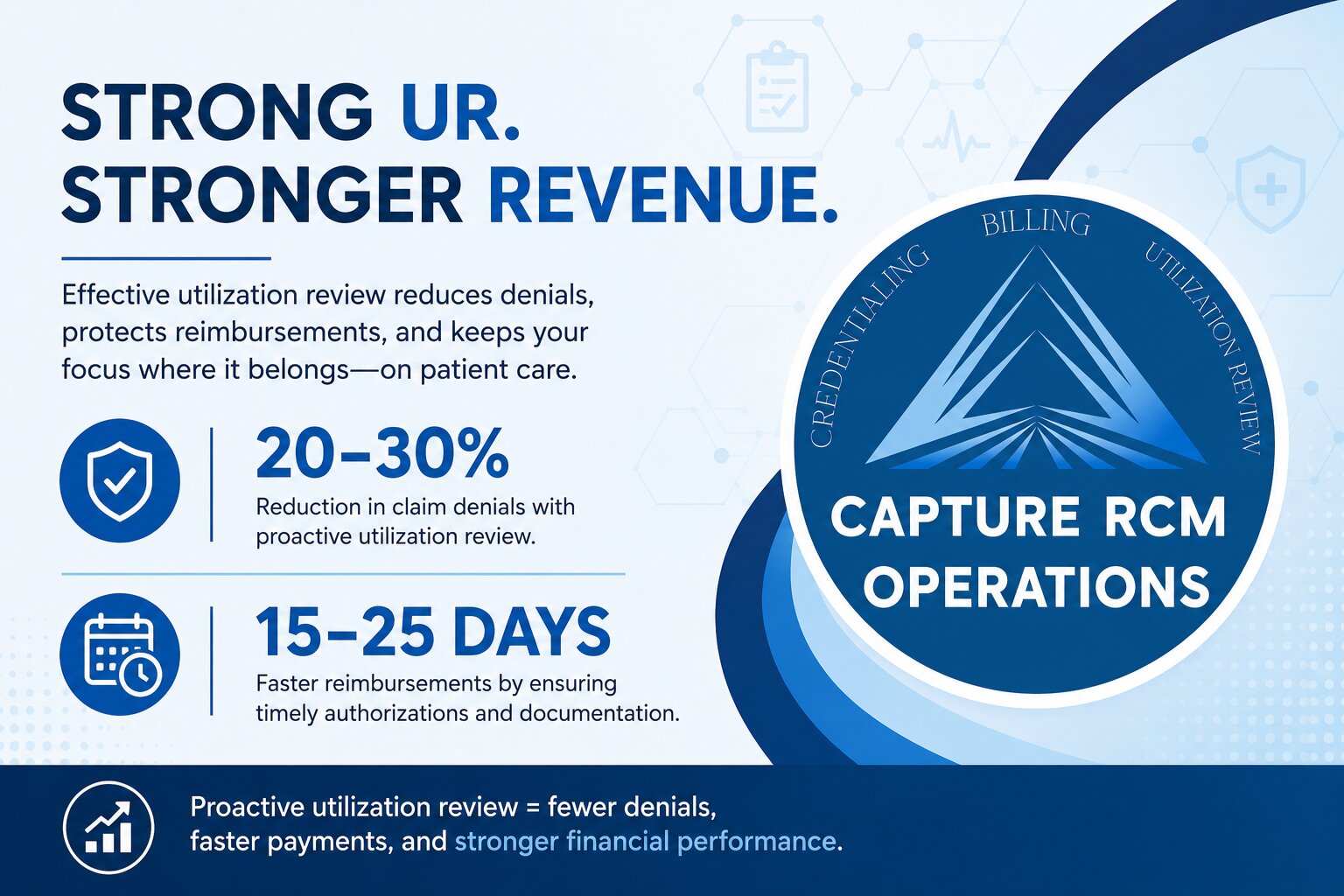
How UR Reduces Denials and Speeds Up Payments
Insurance denials rarely occur without warning.
Many originate from documentation or authorization problems that could have been identified earlier through effective utilization review.
Fewer Medical Necessity Denials
One of the most common reasons insurers deny behavioral health claims is insufficient evidence supporting continued treatment.
Routine utilization review helps ensure documentation remains aligned with payer criteria throughout care.
Cleaner Claims
When utilization review confirms that authorizations, clinical documentation, and treatment dates are complete, billing teams can prepare cleaner claims.
Clean claims generally require fewer corrections and experience fewer processing delays.
Faster Insurance Decisions
Regular communication with payer case managers often resolves potential issues before claims reach the adjudication stage.
Instead of reacting to denials weeks later, providers can address questions during treatment.
Stronger Appeals
Not every denial can be prevented.
However, organizations with structured utilization review processes typically have stronger documentation available when appeals become necessary.
Comprehensive records provide valuable support during reconsideration requests.
What a UR Partner Does vs. In-House Management
Many treatment centers initially assign utilization review responsibilities to clinical staff or administrators.
As organizations grow, however, the workload often expands beyond what internal teams can efficiently manage.
Professional utilization review partners bring specialized expertise that supports both clinical operations and revenue cycle performance.
A dedicated UR partner typically helps with:
- Insurance benefit verification
- Prior authorization management
- Continued stay reviews
- Medical necessity documentation
- Payer communication
- Clinical record review
- Authorization tracking
- Peer review coordination
- Denial prevention strategies
- Appeals support
- Reporting and performance monitoring
Because external specialists work with multiple commercial payers, Medicaid plans, and behavioral health insurers, they stay current on changing authorization requirements and documentation standards.
For many treatment centers, outsourcing utilization review also reduces administrative burden on clinicians, allowing providers to spend more time treating patients instead of managing payer communications.
Why Behavioral Health and SUD Providers Benefit from Strong Utilization Review
Behavioral health reimbursement is often more documentation-intensive than many other medical specialties.
Treatment centers frequently navigate:
- Multiple levels of care
- Time-sensitive authorizations
- Frequent concurrent reviews
- Changing payer criteria
- Medical necessity requirements
- State-specific Medicaid rules
- Commercial insurance policies
Because patients may transition between detoxification, residential treatment, PHP, IOP, outpatient therapy, and medication management, authorization management becomes increasingly complex.
An effective utilization review process helps ensure these transitions are documented appropriately while supporting uninterrupted reimbursement across the continuum of care.
Conclusion
For behavioral health and addiction treatment providers, utilization review is far more than an administrative obligation. It is a proactive revenue protection strategy that helps ensure medically necessary care is properly authorized, documented, and reimbursed.
From securing initial authorizations to managing continued stay reviews and supporting appeals, utilization review plays a central role in reducing denials, improving payment timelines, and strengthening overall revenue cycle performance.
Whether managed internally or through an experienced utilization review partner, a structured UR process helps treatment centers protect reimbursement while allowing clinical teams to remain focused on delivering high-quality patient care. Call us today at (380) 383-6822 to learn how our specialized revenue cycle management solutions support behavioral health and SUD providers with accurate billing, stronger reimbursement, and a healthier financial future.
Frequently Asked Questions
What is utilization review?
Utilization review is the process of evaluating healthcare services to ensure they meet insurance requirements for medical necessity, appropriate level of care, and reimbursement. It supports authorization management and helps providers maintain compliance throughout treatment.
Who performs utilization review?
Utilization review may be performed by trained utilization review specialists, nurses, case managers, clinical reviewers, or specialized revenue cycle partners who coordinate with insurance companies and treatment teams to manage authorizations and documentation.
Why does utilization review matter for reimbursement?
Utilization review helps secure authorizations, supports medical necessity, reduces documentation gaps, and prevents avoidable claim denials. By identifying issues before claims are submitted, it improves the likelihood of timely and accurate reimbursement for behavioral health and substance use disorder treatment services.