

You’ve launched your program, hired your team, and your first clients are finally walking through the door. But behind the scenes? Billing feels like a black hole—especially when it comes to documentation, codes, and utilization review
It is crucial to find a solid and reputable RCM company to help providers like you avoid missteps before they snowball into revenue loss or compliance issues. But what are the biggest billing traps new mental health programs fall into?
Let’s break them down—calmly, clearly, and with quick solutions you can implement now.
1. Missing or Incomplete Documentation
Even the best care won’t get reimbursed if your notes don’t support the service.
Fix it: Standardize templates and train staff early. Every session should clearly document medical necessity, interventions used, and progress toward goals.
2. Incorrect CPT Codes
Using the wrong code can delay payment—or worse, trigger audits.
Fix it: Cross-train your clinical and billing teams to understand the basics of CPT coding. For complex cases, a third-party review can save thousands in denied claims.
3. No Prior Authorization
Skipping this step can mean delivering services for free.
Fix it: Build a utilization review workflow that flags when pre-auth is required. Automate reminders for reauthorization dates. You don’t need to memorize every payer policy—just build a smart system.
4. Overlapping or Conflicting Services
Billing two services that shouldn’t occur at the same time is a common error.
Fix it: Train your team to recognize incompatible billing codes. Use scheduling systems that flag overlaps and keep billing calendars audit-friendly.
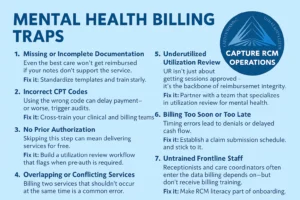
5. Underutilized Utilization Review
UR isn’t just about getting sessions approved—it’s the backbone of reimbursement integrity.
Fix it: Partner with a team that specializes in utilization review for mental health. They’ll monitor medical necessity and payer alignment while freeing your team to focus on care.
6. Billing Too Soon or Too Late
Timing errors lead to denials or delayed cash flow.
Fix it: Establish a claim submission schedule and stick to it. Most payers have a 90–180 day window. Late billing is preventable with the right RCM systems in place.
7. Untrained Frontline Staff
Receptionists and care coordinators often enter the data billing depends on—but don’t receive billing training.
Fix it: Make RCM literacy part of onboarding. A few hours of training can prevent weeks of rework, resubmission, or lost revenue.
Quick Wins for Mental Health Billing Success
- Use templates for clinical notes
- Create a CPT code cheat sheet
- Automate pre-auth tracking
- Integrate UR and billing teams
- Set weekly billing checkpoints
Ready to Strengthen Your UR Process?
Utilization review can make or break your reimbursement—especially in mental health. Call (380) 383-6822 or visit Capture RCM to learn more about our utilization review services in the United States. We’re here to help your program run smarter, not harder.