

I didn’t think about the revenue cycle much in those early days.
My focus was always on the same things most program leaders care about: the patients in the room, the families calling for help, the clinicians trying to do good work in a very difficult field.
If the care was strong, I assumed the rest would follow.
For a long time, it mostly did.
Then one month the numbers stopped moving.
At first it looked like a small delay. A few claims lingering longer than usual. Our billing team mentioned that insurers were still reviewing some cases. Nothing alarming—at least not yet.
But as the days passed, the receivables report started to feel heavier. More claims sitting. More payments waiting. More silence from insurers.
Eventually someone pulled up the dashboard during a leadership meeting and said something none of us had expected to hear:
“If these claims don’t release soon, we might have a payroll issue.”
That was the moment I realized something important about treatment programs.
Providing care is only half the system.
The other half happens quietly behind the scenes—often through processes like insurance advocacy for ongoing treatment coverage—and when that part breaks, the financial foundation of a program can start to wobble.
The Slow Build-Up Nobody Notices at First
Revenue problems rarely appear overnight.
More often, they creep in quietly.
A claim that used to be paid in 30 days takes 45.
Another sits in review longer than expected.
Then a few more get delayed.
Individually, none of these events look serious.
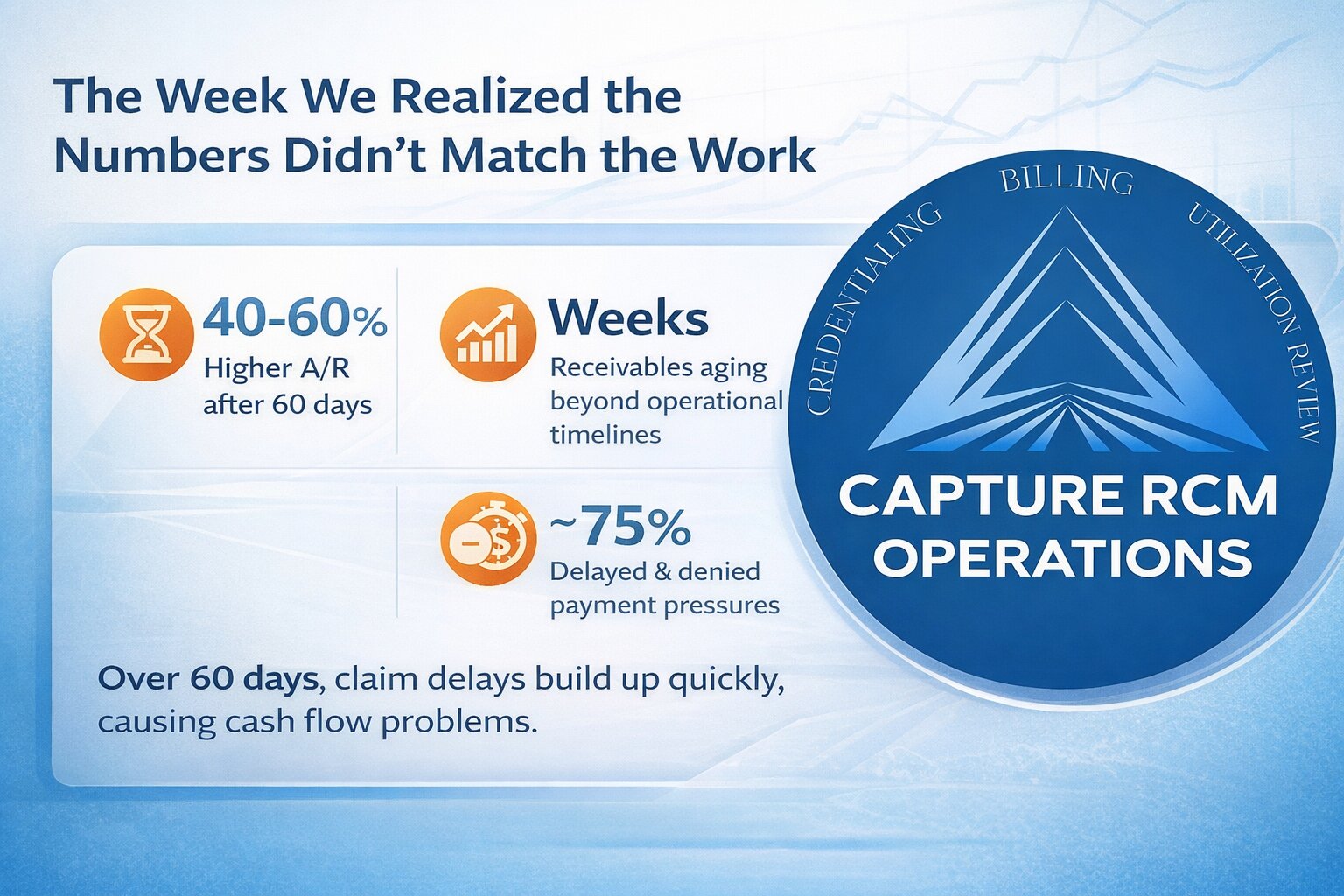
But when they start happening across dozens of patients at once, the financial pressure builds quickly.
In our case, it showed up in the A/R aging report.
Claims that normally would have cleared weeks earlier were still waiting on insurance review.
The work had already been done.
The treatment had already been delivered.
But the payment hadn’t moved.
And without that movement, cash flow slows down.
Treatment programs don’t always talk about this openly, but the reality is simple: healthcare reimbursement timelines don’t always match operational timelines.
Staff still get paid every two weeks.
Utilities still come due.
Facilities still cost money to run.
When reimbursement stalls, everything else suddenly feels fragile.
When Good Clinical Work Isn’t Enough
One of the hardest things to accept was that our clinicians weren’t the problem.
They were doing excellent work.
Patients were participating in therapy. Families were engaged. The treatment plans were thoughtful and structured.
From a clinical perspective, things were moving in the right direction.
But insurance companies weren’t evaluating care based on outcomes alone.
They were evaluating documentation.
They wanted clear clinical updates explaining:
- Why the patient still required structured care
- What symptoms remained active
- What risks still existed
- Why stepping down from treatment would be premature
If those updates weren’t delivered clearly—and delivered on time—claims slowed down.
Not because care wasn’t justified.
Because the system reviewing the case hadn’t received the explanation it needed.
That’s where strong utilization review services quietly become critical.
The Week Payroll Got Uncomfortably Close
The tension that week was hard to ignore.
Our leadership team started checking financial reports more frequently. Our billing department was making more follow-up calls.
Everyone was hoping the same thing:
That the claims under review would release in time.
Treatment centers operate with surprisingly tight margins. Even well-run programs can feel pressure if large reimbursement batches stall at once.
One afternoon someone printed the updated aging report and brought it into the office.
The room got quiet.
If the payments came through, we were fine.
If they didn’t, we would need to make some difficult decisions.
No program leader ever wants to be in that position—looking at financial spreadsheets while knowing that dozens of patients are in the building receiving care.
In that moment, the connection between revenue cycle operations and patient care becomes painfully clear.
The Realization That Changed Our Approach
After that week, we started asking deeper questions.
Why were these claims getting stuck?
What conversations were happening with insurers—and which ones weren’t?
Were we explaining patient needs clearly enough during coverage reviews?
The answer, we discovered, was complicated.
Our clinicians were documenting care thoroughly. But translating those clinical notes into the specific language insurers require is a specialized skill.
Insurance reviewers aren’t sitting in therapy sessions.
They’re reading summaries.
If those summaries don’t clearly justify the current level of care, claims often stall in review.
Once we understood that gap, we realized we needed stronger systems around insurance communication and documentation review.
The Quiet Change That Stabilized the System
The solution wasn’t dramatic.
There was no overnight transformation.
Instead, we brought in dedicated support focused on improving communication with insurers and strengthening documentation during coverage reviews.
The difference appeared gradually but noticeably.
Claims began moving faster.
Denials became less frequent.
Appeals were handled earlier.
Our billing team stopped spending hours chasing stalled claims.
And perhaps most importantly, the financial stress that had quietly built up began to ease.
The entire organization felt calmer.
When the revenue cycle runs smoothly, leadership can return its attention to what actually matters: patient care.
Why Many Programs Learn This Lesson Late
If you talk to enough treatment program leaders, you’ll hear variations of the same story.
Early on, most organizations focus on the visible parts of care:
Building programs.
Hiring clinicians.
Supporting families.
Operational systems around insurance communication often develop later, sometimes after a financial scare forces the issue.
It’s understandable.
No one opens a treatment center because they love insurance paperwork.
But the reality is that strong revenue cycle infrastructure protects the very care those programs exist to provide.
Without it, even excellent clinical programs can struggle to maintain stability.
The Work That Keeps Treatment Programs Running
There’s an entire layer of behavioral healthcare that patients and families rarely see.
People reviewing documentation.
Professionals advocating for coverage decisions.
Teams translating clinical progress into insurer language.
It’s not glamorous work.
But it matters.
Because every time a claim moves smoothly through the system, it helps ensure that programs can keep their doors open and continue serving the people who need them.
Sometimes the most important systems in healthcare are the quiet ones working in the background.
FAQ
Why do treatment centers experience reimbursement delays?
Insurance companies often review clinical documentation before approving payment. If documentation is incomplete or unclear, claims may remain under review longer than expected.
How can delayed insurance payments affect treatment programs?
Delayed reimbursements can disrupt cash flow, making it harder for programs to cover operational expenses such as payroll, facility costs, and staffing.
Why is communication with insurance companies so important?
Insurance providers rely on clinical documentation to determine whether treatment should continue. Clear communication helps ensure the patient’s needs are fully understood during coverage reviews.
Can better documentation improve reimbursement timelines?
Yes. When documentation clearly explains the patient’s clinical needs and progress, insurers are more likely to approve continued coverage quickly.
Why do many programs underestimate this part of operations?
Many leaders prioritize clinical care and patient experience, which are essential. But the administrative processes that translate care into insurance coverage often receive less attention until financial pressures appear.
If Claims Are Slowing Down, It May Be Time to Look Closer
Many treatment programs eventually encounter the same challenge we faced—reimbursement delays that begin affecting financial stability. With the right operational support in place, those delays can often be reduced significantly.
Call 380-383-6822 or explore our insurance review support for treatment programs to learn more about our Utilization review services and how they help treatment organizations maintain stable reimbursement and continue providing care.