


You finally asked for help.
Maybe that took weeks.
Maybe months.
Maybe years.
You found a therapist. Scheduled the appointment. Logged into the telehealth session even though part of you wanted to cancel. You answered difficult questions honestly. You let someone see parts of your life you’ve been holding together quietly for a long time.
And then the insurance claim gets denied.
For many people, that moment feels strangely personal.
Not just frustrating.
Not just expensive.
Personal.
Like the system is telling you that even after finally doing the hard thing correctly, you still somehow failed.
If you’ve been searching for answers about mental health billing support because confusing denial codes or telehealth billing problems are making an already difficult season feel heavier, you are not alone in that experience.
And more importantly:
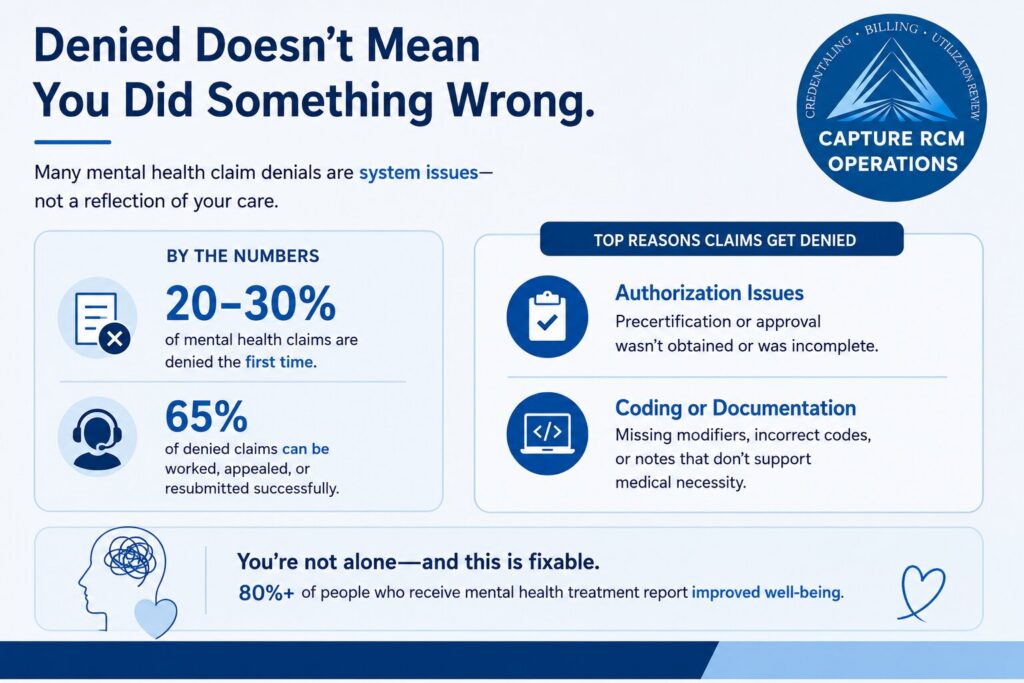
A denied claim does not automatically mean your care was unnecessary, invalid, or handled incorrectly.
Mental Health Denials Hit Differently Than Other Medical Bills
A lot of people don’t realize this until it happens to them.
If a dental claim gets denied, it’s annoying.
If an orthopedic bill gets delayed, it’s stressful.
But mental health denials often land somewhere deeper emotionally because the process of seeking care itself already requires vulnerability.
Especially for first-time treatment seekers.
You may have already spent weeks internally debating:
Do I really need therapy?
Am I overreacting?
What if this doesn’t help?
What if people think I’m weak?
Then after finally reaching out, the insurance system responds with codes, paperwork, and confusion.
That emotional timing matters.
Because when someone is already exhausted emotionally, even small administrative problems can feel enormous.
Insurance Systems Rarely Feel Human
This is one of the hardest parts.
Most denial notices are written in language that sounds cold, technical, and almost intentionally difficult to understand.
You open the letter expecting clarity and instead find:
- CO-197
- Authorization required
- Service not covered
- Documentation issue
- Modifier missing
- Claim adjustment
For people outside healthcare billing, those phrases can feel impossible to interpret.
And honestly? Even providers sometimes struggle navigating changing payer rules and telehealth requirements.
So if you feel lost reading your denial notice, that reaction makes complete sense.
You are trying to understand a system built around administrative coding while your brain may already be overwhelmed by anxiety, depression, trauma, burnout, grief, or emotional exhaustion.
That’s a heavy combination.
A Denial Often Reflects a System Problem, Not a Personal Failure
This distinction matters more than most people realize.
Many denied therapy claims happen because of administrative or technical issues completely unrelated to whether the care itself was appropriate.
For example, a 90837 telehealth claim denial may occur because:
- A required modifier was omitted
- Authorization rules changed
- Telehealth billing policies shifted
- Documentation language didn’t match payer expectations
- Session limits were exceeded
- Coordination of benefits issues existed
- The insurer processed the claim incorrectly
None of those things automatically mean therapy wasn’t medically necessary.
But when someone is already emotionally vulnerable, it’s easy to internalize the denial anyway.
Especially if this is your first experience navigating mental health treatment.
People Often Blame Themselves First
We see this constantly.
Someone receives a denial notice and immediately assumes:
I must’ve done something wrong.
Maybe I filled out paperwork incorrectly.
Maybe I shouldn’t have started therapy.
Maybe my problems aren’t serious enough.
That internal spiral happens fast.
Partly because many people seeking mental health care already carry self-doubt before treatment even begins. Insurance confusion just amplifies it.
And unfortunately, administrative systems rarely communicate with the kind of emotional care people actually need during vulnerable moments.
The paperwork feels procedural.
But your experience inside it isn’t.
Telehealth Changed Access — But It Also Created Confusion
Telehealth made therapy accessible for many people who otherwise may never have reached out for support.
People managing:
- Panic attacks
- Depression
- Burnout
- Social anxiety
- Trauma symptoms
- Work exhaustion
- Parenting stress
Suddenly had more flexible access to care.
But telehealth billing systems also evolved quickly, and insurance companies have not always handled those changes consistently.
That’s one reason telehealth denials became so confusing for many people.
One insurer may approve services easily while another requires additional modifiers, authorization steps, or updated billing structures.
The rules can shift unexpectedly.
And for treatment seekers already emotionally overwhelmed, trying to understand those changes can feel impossible.
Sometimes the Emotional Impact Lasts Longer Than the Financial One
This is the part people rarely talk about openly.
A denied claim can make someone emotionally pull away from treatment itself.
Not because they stopped needing support.
Because the experience felt discouraging enough to trigger shame, hopelessness, or emotional shutdown.
We’ve seen people:
- Delay future sessions
- Stop responding to providers
- Ignore follow-up calls
- Avoid opening insurance mail entirely
Not because they didn’t care about their mental health.
Because navigating the system became emotionally exhausting.
Like finally asking for help and then immediately being handed another obstacle course.
You Are Allowed to Feel Confused by This
Seriously.
A lot of people quietly believe they should already understand insurance language or billing systems automatically.
But most people don’t.
Healthcare billing is complicated even for professionals.
You are allowed to ask:
- What exactly was denied?
- Was authorization required?
- Was this a coding issue?
- Is this appealable?
- Can the claim be corrected?
- Was telehealth covered differently under my plan?
- Is there additional documentation needed?
Good support should make things clearer, not more intimidating.
You should not feel embarrassed for needing explanations that sound human.
Mental Health Care Already Requires Courage
That’s why these situations hit so hard emotionally.
You may have spent months surviving silently before finally scheduling that first session.
Some people reach therapy after:
- Years of masking anxiety
- Quiet panic attacks
- Emotional numbness
- High-functioning depression
- Relationship strain
- Sleepless nights
- Constant burnout
The act of asking for help already carries emotional weight.
So when the claim gets denied afterward, it can feel like the system is questioning whether your struggle was “real enough.”
That’s not what the denial necessarily means.
But emotionally, many people experience it that way.
Administrative Problems Can Trigger Old Wounds
Especially for people carrying histories of:
- Rejection
- Neglect
- Emotional invalidation
- Feeling “too much”
- Fear of burdening others
A cold insurance denial can accidentally reactivate those feelings underneath the surface.
That’s why these situations often feel heavier than outsiders expect.
To someone already emotionally vulnerable, a denial notice can sound like:
Your needs are inconvenient.
Your problems are questionable.
You should handle this alone.
Even though that’s not what the paperwork literally says.
The System Is Complicated — Your Pain Is Not
This matters.
You do not need to prove you are “struggling enough” to deserve support.
And confusing insurance problems do not erase the legitimacy of your experience.
A lot of emotionally exhausted people minimize themselves automatically.
They think:
Other people have it worse.
I should just push through.
Maybe therapy is unnecessary.
But emotional suffering does not need to become catastrophic before support becomes appropriate.
Sometimes people seek therapy before things completely fall apart.
That’s healthy.
Even if the insurance process makes it feel harder than it should.
A Denial Is Often a Detour, Not the End
Many claims that are denied initially can still be:
- Corrected
- Clarified
- Resubmitted
- Appealed
- Reprocessed
Insurance systems involve layers of review that many treatment seekers never see directly.
That doesn’t make the experience less frustrating.
But it does mean a denial is not always final.
And honestly, part of good billing support is helping reduce the emotional panic people feel when administrative problems appear unexpectedly.
Because when someone is already overwhelmed emotionally, uncertainty itself becomes exhausting.
You Shouldn’t Have to Carry Both Healing and Administrative Chaos Alone
Mental health care already asks a lot from people.
Energy.
Honesty.
Vulnerability.
Patience.
Trying to simultaneously decode insurance systems while emotionally struggling can feel like balancing on one foot during an earthquake.
That’s why compassionate billing support matters more than many people realize.
Not just technically.
Emotionally.
People deserve explanations that reduce fear instead of increasing it.
FAQ: Mental Health Insurance Claim Denials
Why was my therapy claim denied if I attended the session?
Claims can be denied for many administrative reasons unrelated to whether the therapy itself was appropriate or needed.
What does CO-197 mean?
CO-197 often relates to authorization or precertification issues, though exact interpretation depends on the insurer and claim details.
Can telehealth claims be denied even if therapy was covered before?
Yes. Telehealth billing rules, modifiers, and payer requirements sometimes change unexpectedly.
What causes 90837 telehealth claim denial issues?
Common causes include authorization problems, modifier errors, documentation mismatches, payer limitations, or evolving telehealth billing requirements.
Does a denial mean my insurance won’t cover therapy at all?
Not necessarily. Many denied claims can still be corrected, appealed, or resubmitted successfully.
Why is mental health billing so confusing?
Mental health billing involves changing payer rules, coding systems, telehealth requirements, and insurer-specific policies that are difficult even for professionals to navigate.
Can denied claims be appealed?
Often yes. Many claims go through appeals, corrections, or reprocessing depending on the denial reason.
What should I do if I don’t understand my denial notice?
You can contact your provider, billing support team, or insurance company and ask for clarification in plain language.
Is it normal to feel emotionally overwhelmed by insurance problems?
Very normal. Administrative stress often feels much heavier for people already navigating anxiety, depression, trauma, or emotional exhaustion.
Reaching Out for Help Was Still the Right Thing to Do
Even if the paperwork became confusing.
Even if the denial notice scared you.
Even if you’re emotionally tired of navigating systems that feel cold and impersonal.
Seeking support was still a meaningful step.
You did not fail because insurance created complications.
And a difficult billing experience does not erase the courage it took to ask for help in the first place.
Call (380) 383-6822 or visit our mental health billing services to learn more about our services, billing, mental health services in your area.