

For small mental health practices, the decision to offer both self-pay and insurance billing often starts with the best intentions—expanding access, accommodating more clients, and maximizing revenue. But without a smart billing strategy, that flexibility can lead to administrative overwhelm, delayed payments, and frustrated staff.
At Capture RCM, we help small practice owners implement dual-mode billing systems that work. Whether you’re transitioning from self-pay to insurance or managing both models already, our mental health billing services are built to support growth—not chaos.
Why Practices Offer Both Self-Pay and Insurance Billing
Most practices don’t start with both. But as caseloads grow and client needs diversify, payment flexibility becomes a strategic advantage.
Benefits of offering self-pay:
- Faster payments (often at time of service)
- Fewer claims denials or documentation hurdles
- Greater autonomy in setting rates and policies
- Attractive to clients with high deductibles or out-of-network plans
Benefits of accepting insurance:
- Increases access for lower-income clients
- Opens doors to employer-referred referrals
- Can fill empty calendar spots with network traffic
- Builds long-term caseload stability
But managing both requires more than good intentions. Without streamlined billing infrastructure, practices face duplicate systems, compliance uncertainty, and manual workarounds that steal time from client care.
Step 1: Map the Billing Workflows for Both Payment Models
Each payment model comes with its own rules, timelines, and client expectations. Before layering one on top of the other, practice owners need a clear workflow for each.
Self-pay workflow checklist:
- When is payment collected—before or after session?
- How are Good Faith Estimates documented?
- Are there policies for late payments or payment plans?
Insurance workflow checklist:
- Is verification automated or manual?
- Who handles prior auths, coding, and claim follow-up?
- How is payer compliance tracked?
When these processes aren’t clearly defined, staff waste hours navigating exceptions, and the risk of missed revenue increases.
Step 2: Decide What You Can Build—and What You Should Buy
One of the biggest strategic decisions for a growing practice is whether to handle billing in-house or outsource it. Many owners try to build internal processes first. But as client volume and complexity grow, they quickly hit operational limits.
Signs your current billing system isn’t sustainable:
- Frequent rework on claims or denials
- Unclear A/R reports or mismatched revenue tracking
- Staff burnout due to unclear billing roles
- Frequent client questions or confusion about bills
Here’s a breakdown of build vs. buy considerations:
| Billing Option | Advantages | Challenges |
|---|---|---|
| In-House Admin | Full control, no external fees | High training load, compliance risks, limited scalability |
| Billing Software Only | DIY efficiency, partial automation | Still requires billing knowledge and staff attention |
| RCM Services (like Capture) | Expert oversight, tech-enabled, scalable workflows | Requires vetting and transition support |
If you’re running a small team without dedicated billing staff—or if you’re spending more time on billing than on leadership—it’s time to evaluate RCM support.
Step 3: Align Payment Models with Compliance Requirements
A common myth is that self-pay is “easier” than insurance billing. But self-pay still requires compliance with federal laws like the No Surprises Act and HIPAA.
Your billing system should support:
- Automated Good Faith Estimates
- Clear documentation of client communications
- Secure handling of payment info (PCI compliance)
- Accurate coding for out-of-network superbills
Insurance billing adds layers of compliance, especially around authorization, documentation, and credentialing. Mistakes can lead to delayed or denied payments—and even audits.
Outsourcing to a mental health billing service like Capture RCM reduces your risk by integrating compliance directly into every claim and client transaction.
Step 4: Use Integrated Tech to Avoid Fragmentation
When practices run self-pay and insurance systems separately—on different platforms, spreadsheets, or staff—it creates friction. A well-structured billing system should unify both revenue streams, even if policies vary.
Look for tech that provides:
- One dashboard for all claims and payments
- Separate but connected workflows for insurance vs. private pay
- Real-time tracking of claim status, aging, and patient balance
- Customizable reports for revenue analysis and forecasting
Capture RCM’s platform connects scheduling, EHR, and billing to give practice owners visibility and peace of mind—without needing to log in to five different systems.
Step 5: Monitor ROI, Not Just Payments
Many practices underestimate the cost of internal billing—especially in time. A front desk team spending five hours a week untangling EOBs or chasing payments is a hidden loss.
Questions to evaluate your current billing ROI:
- What’s your average claim turnaround time?
- What percentage of claims are paid on first submission?
- How often are you writing off balances or adjusting invoices manually?
- How much time do you or your team spend answering billing questions?
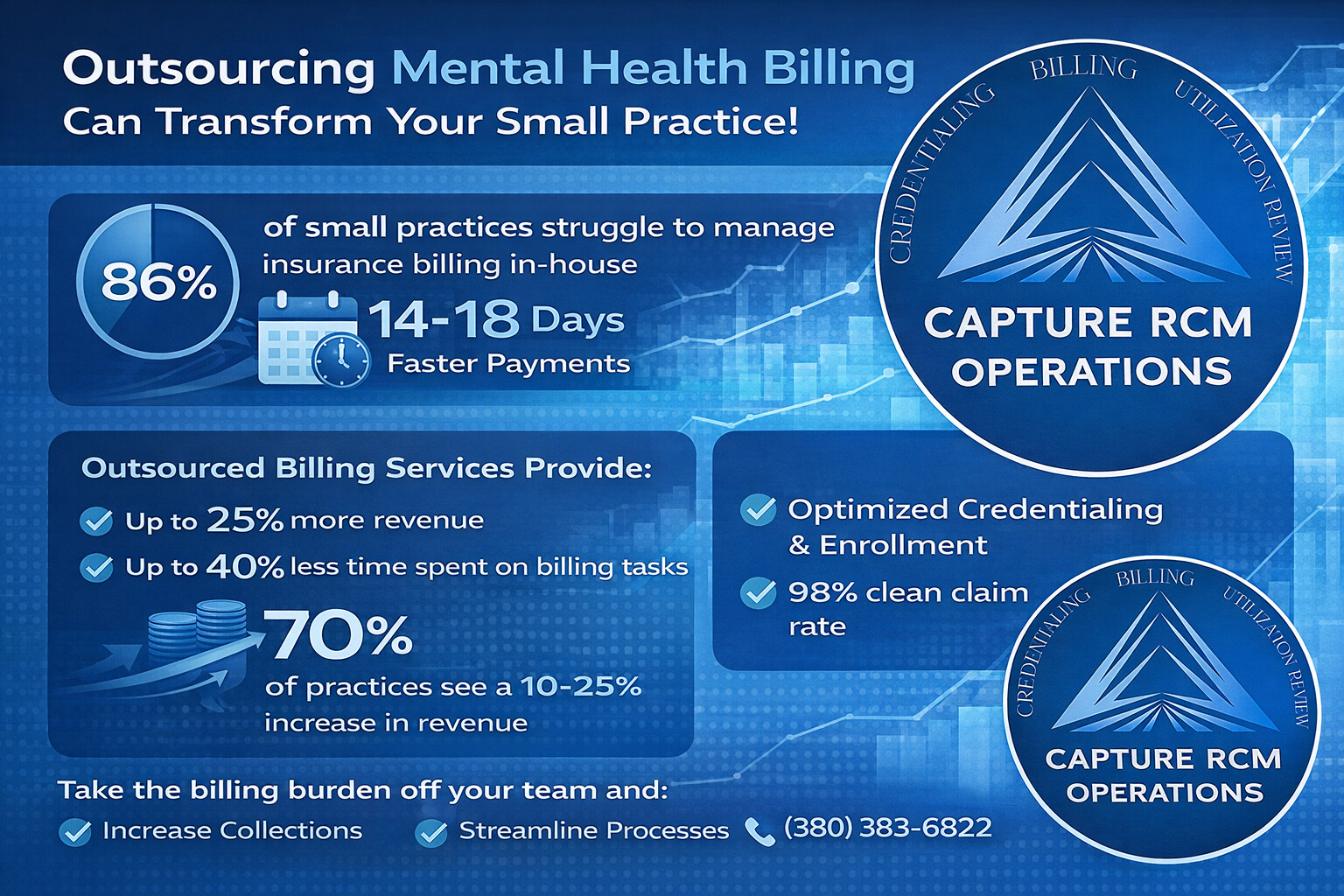
If the answers make you wince, you’re not alone. Most small practices can reclaim revenue and reduce stress by outsourcing billing—especially when managing dual payment models.
Considering outsourcing? Explore our insurance credentialing services to ensure your payers and billing systems are aligned for long-term success.
FAQ: Offering Both Self-Pay and Insurance in Mental Health Billing
Q: Can I charge different rates for self-pay and insurance clients?
Yes—but be cautious. Insurance contracts often include “usual and customary rate” clauses. Charging self-pay clients significantly less than what you bill insurers can raise red flags. Consult legal or billing experts.
Q: Do I need to provide Good Faith Estimates for all self-pay clients?
Yes. Under the No Surprises Act, all uninsured or self-pay clients must receive a written estimate of expected charges in advance of services.
Q: What’s the biggest risk of managing billing in-house?
Compliance errors and missed revenue. Without regular training and system checks, internal billing can fall out of sync with payer rules, leading to denials, rework, or audit exposure.
Q: How much does outsourced mental health billing cost?
Most RCM services charge a percentage of collections, often between 4–9%. This cost is usually offset by improved collection rates, faster payment cycles, and reduced staff burden.
Q: Can I outsource just insurance billing and keep self-pay in-house?
Yes, some practices choose to outsource only insurance claims while handling self-pay themselves. This hybrid model can work well when integrated into one unified billing system—something Capture RCM supports.
📞 Ready to simplify billing and refocus your team on client care?
Call (380) 383-6822 or visit our mental health billing services page to learn more about how we help practices like yours offer flexible payment options without chaos.