

If you’re running a small mental health practice, you’ve likely worn every hat—clinician, scheduler, team lead, and sometimes even biller. But as your caseload grows or payer complexity increases, billing can quickly shift from manageable to overwhelming. Choosing between keeping billing in-house or outsourcing to a specialized partner isn’t just a workflow decision—it’s a strategic one.
In this guide, we break down what mental health billing services entail, what to expect from each path (build vs buy), and how to make a smart, ROI-focused decision for your practice. Whether you’re expanding your client base or struggling with denied claims, this will help you move forward with clarity.
📍 Learn more about our mental health billing services built specifically for small and midsize behavioral health practices.
Why Mental Health Billing Demands Specialized Expertise
Behavioral health billing isn’t just about submitting claims. It involves:
- Understanding time-based CPT codes and appropriate use of modifiers
- Navigating parity law issues, especially for Medicaid and commercial plans
- Managing credentialing, revalidation, and payer enrollment
- Appealing denied claims and following up on underpayments
Unlike general medical billing, mental health billing has high administrative friction and minimal room for error. A single misused code can delay payment by weeks or even months.
📊 Data Point: A 2022 APA study found that behavioral health providers spend 20% more time on billing-related admin tasks than other specialties—largely due to inconsistent payer guidelines and documentation demands.
For small practices with limited staff, this complexity can become a barrier to sustainability and growth.
What It Takes to Manage Billing In-House
Some practice owners prefer to build and retain full control over their billing department. That path can work—but only with the right infrastructure. If you’re considering internal billing, here’s what it typically requires:
1. Skilled Personnel
You’ll need at least one experienced biller with behavioral health knowledge. Depending on your volume, you may also need support staff for posting payments, chasing denials, and managing credentialing.
2. Software Ecosystem
Reliable practice management software (PMS), clearinghouse access, and secure claim tracking tools are non-negotiables. These tools require regular updates, training, and integration management.
3. Time and Oversight
Someone on your team must regularly monitor:
- Claim submission timelines
- Payment turnaround
- Rejected or denied claims
- Payer trends and coding updates
This time often falls on clinical leaders, taking them away from patients and staff development.
⚠️ Hidden Cost Alert: Many small practices underestimate the true cost of in-house billing. When you factor in salary, software, training, and lost clinical time, it often exceeds the cost of professional billing services.
When It’s Time to Consider Outsourcing
Outsourcing billing doesn’t mean losing control—it means choosing focused expertise and scalable support. You gain a partner who understands behavioral health revenue cycles and works proactively to protect your bottom line.
Benefits of Professional Mental Health Billing Services:
- Higher Clean Claim Rates: With specialized coders and scrubbing processes, professional RCM teams minimize rework.
- Better Follow-Up on Denials: Dedicated A/R teams track aging claims and manage appeals quickly.
- Credentialing and Enrollment Help: Good partners assist with payer enrollment, CAQH management, and compliance tasks.
- Insightful Reporting: Instead of guessing, you get clear dashboards showing revenue trends, payer performance, and risk areas.
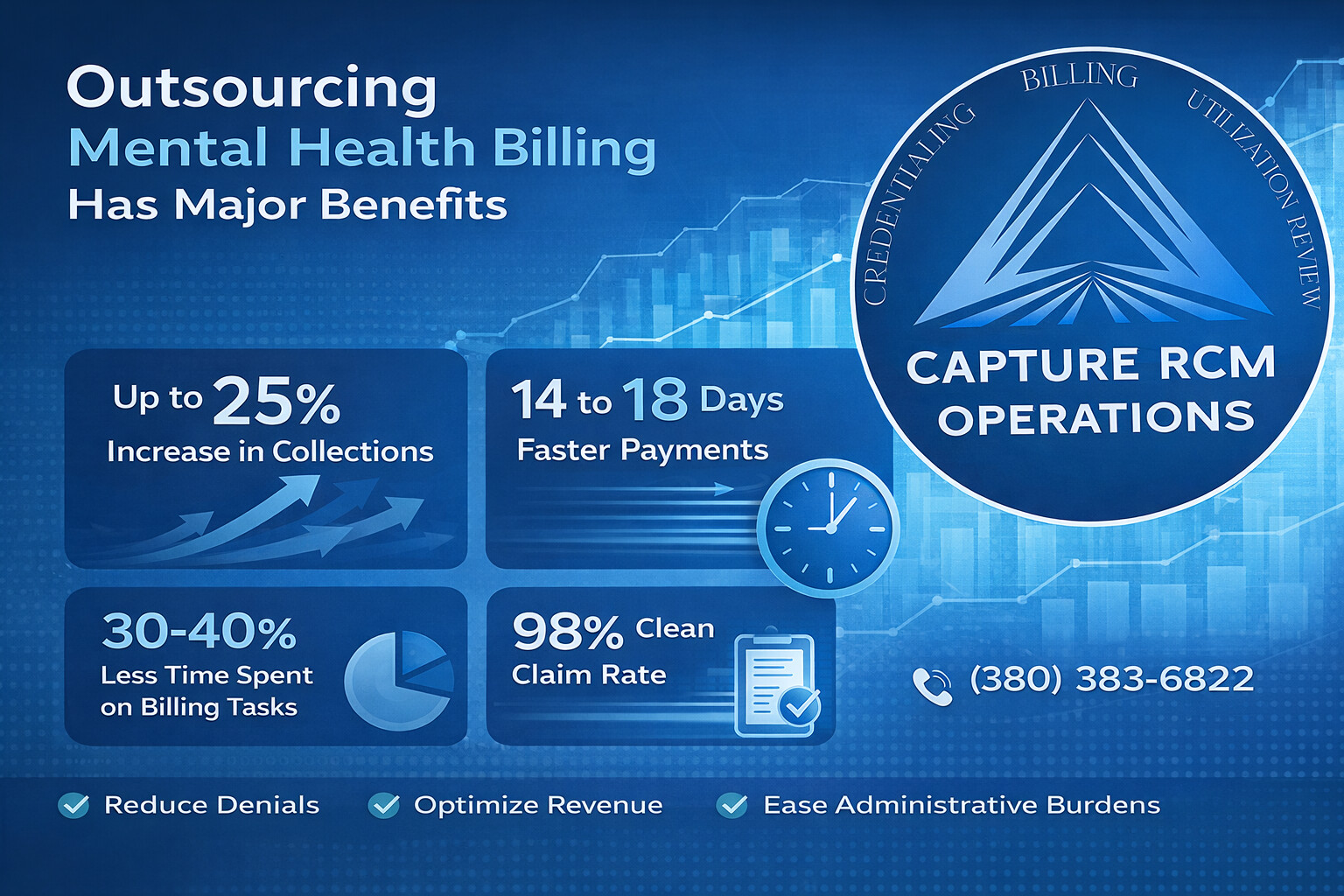
💡 Practices that outsource billing to behavioral health specialists report up to 25% improvement in collections and significantly fewer days in A/R (average reduction of 14–18 days).
If your internal team is stretched thin—or you’ve lost revenue due to denials—it’s worth exploring.
Comparing In-House vs Outsourced Billing: Key Considerations
| Feature | In-House Billing | Outsourced Billing Services |
|---|---|---|
| Staffing Needs | Hire, train, and supervise billing staff | Billing experts provided by vendor |
| Cost Structure | Salaries, software, benefits | % of collections or fixed monthly rate |
| Specialization | Generalist unless trained internally | Behavioral health billing experts |
| Scalability | Slow and costly | Fast scale-up/down as volume shifts |
| Compliance Risk | Depends on internal QA | Built-in QA and regulatory monitoring |
| Revenue Visibility | Manual tracking unless systems are robust | Regular reporting and insights |
While in-house billing can work for static practices with stable payers and low volume, most growth-stage or multi-payer clinics benefit from outsourcing.
Choosing the Right Mental Health Billing Services Partner
Not all RCM vendors understand behavioral health. Here’s what to look for:
- Niche Focus: Choose a team that works primarily with mental health and behavioral health providers.
- State Familiarity: Mental health billing rules vary by state. Your partner should understand local Medicaid, regional payers, and license-specific guidelines.
- Credentialing Support: Ask whether they offer enrollment, re-attestation, and NPI updates as part of the service.
- Data Transparency: Look for vendors who provide regular A/R dashboards, collection summaries, and payer feedback trends.
- Growth Alignment: The right partner helps you expand services, add locations, and stay audit-ready.
Get Support That Grows with Your Practice
Whether you’re adding clinicians, expanding IOP services, or tired of chasing down insurance payments, Capture RCM Operations can help. We serve practices across the behavioral health spectrum—from solo providers to multi-location outpatient centers.
FAQ: Mental Health Billing Services for Small Practices
What does a mental health billing service include?
Most providers handle:
- Claim submission and scrubbing
- Denial management and appeals
- Payment posting
- Insurance verification
- Credentialing and payer enrollment
- Monthly or real-time reporting
Capture RCM offers all of these under one service umbrella.
Is outsourcing billing HIPAA-compliant?
Yes. Reputable billing services operate under strict HIPAA guidelines, use encrypted software, and sign Business Associate Agreements (BAAs). Always confirm security protocols before choosing a vendor.
How much do outsourced billing services cost?
Most RCM partners charge a percentage of collected revenue (typically 4–8%) or a flat monthly rate. The ROI often comes from faster payments, fewer denials, and less internal labor overhead.
Will I lose control if I outsource?
Not at all. You maintain visibility into every claim, receive reporting, and retain final authority over payer relationships. A good billing partner acts as an extension of your practice—not a replacement.
How do I know if I’m ready to outsource?
If you’re experiencing:
- Frequent claim denials
- Unpredictable revenue cycles
- Overwhelmed admin staff
- Growth without back-end infrastructure
…it’s time to explore billing support.
Ready to Improve Your Billing—and Your Bottom Line?
At Capture RCM Operations, we believe your practice should spend less time on claims and more time on care. Our mental health billing services are tailored for small providers who want expertise without the overhead.
📞 Call (380) 383-6822 or visit to learn more about our mental health billing services.