
For small substance use treatment practices, billing isn’t just a back-office task—it’s a risk center and a revenue driver. If you’re still managing billing in-house, now may be the time to evaluate whether professional billing services offer the scalability and reliability your business needs to grow.
1. Hidden Costs of In-House Billing
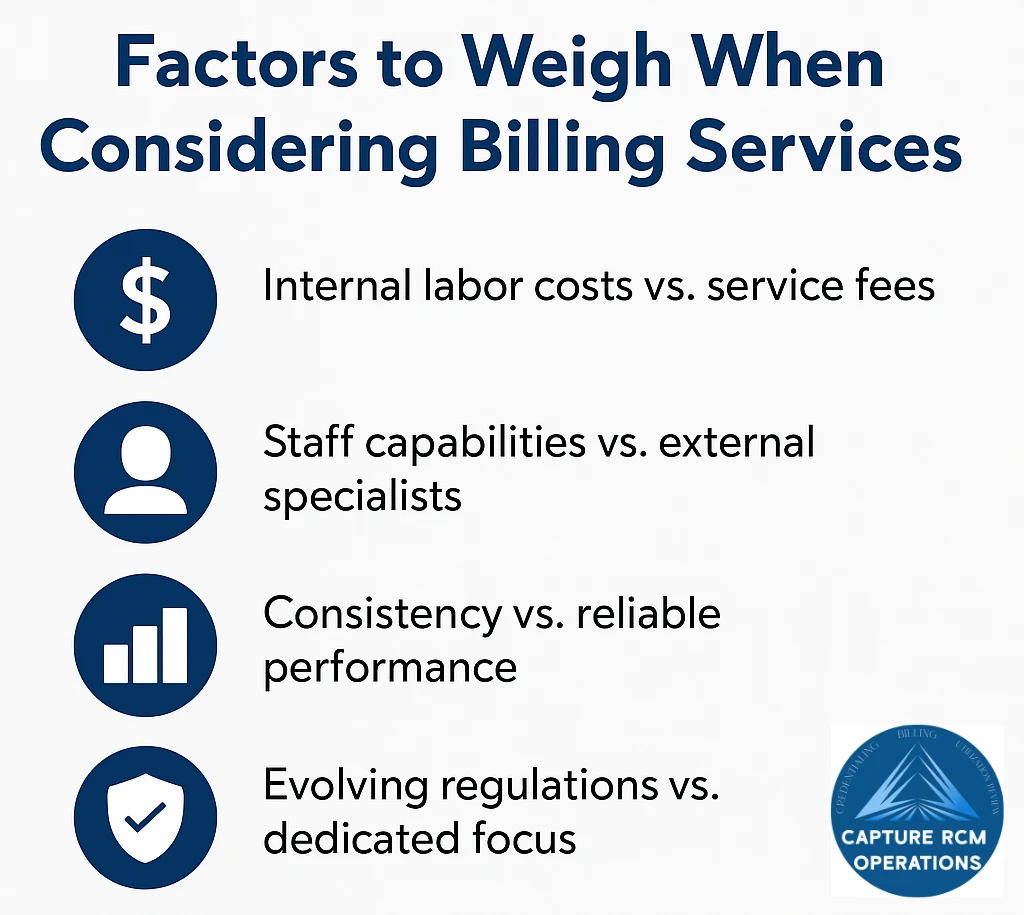
What seems cost-effective on paper often creates hidden overhead in practice. Internal billing staff require salary, benefits, PTO coverage, training, and compliance oversight. Small practices also risk staff turnover—meaning institutional knowledge walks out the door. Factor in software, clearinghouse fees, and time spent managing denials, and the true cost of “keeping it in-house” grows fast.
2. Compliance Requirements Are Getting Tougher
Payers are tightening requirements, especially for substance use disorder (SUD) services. Proper billing demands familiarity with ASAM levels of care, place-of-service nuances, and frequent UR documentation. A missed modifier or incorrect diagnosis link can lead to denials—or worse, audits. Partnering with a team that specializes in substance use billing services reduces your exposure and ensures claims meet current payer standards.
3. Cash Flow Hinges on Clean Claims
Even a few delayed or denied claims can destabilize cash flow in a small practice. Outsourced billing partners often achieve first-pass claim acceptance rates above 90%, while in-house teams average closer to 70–80%. Faster claim cycles = faster revenue = better payroll, less stress, and more room to grow. Look for a partner that tracks clean claim rate and shares monthly A/R benchmarks.
4. Specialty Billing Requires Specialty Knowledge
Substance use billing is complex—especially in PHP, IOP, and residential levels of care. Do your current billing staff understand time-based codes, multiple-day billing, and payer-specific authorization workflows? An RCM partner like Capture RCM specializes in behavioral health and substance use treatment models, including bundled billing, state-specific rules, and telehealth adjustments.
5. What to Look for in a Billing Partner
Not all billing services are created equal. Vet your partner for:
- Behavioral health specialization
- Payer knowledge in your region
- Denial management protocols
- Transparent reporting and KPIs
- Credentialing and compliance support
Internal processes should integrate seamlessly with your EMR—and your clinical workflows.
6. When It’s Time to Make the Switch
If you’re experiencing any of the following, it’s time to consider outsourcing:
- Frequent denials or payment delays
- Overwhelmed front office staff
- Staff turnover disrupting billing
- Revenue that doesn’t reflect patient volume
- Unclear reporting or no visibility into A/R trends
RCM outsourcing doesn’t mean loss of control—it means more time to lead, scale, and serve.
Better Billing Starts with Better Systems
Small practices grow faster when their back-end operations are built for scale. Outsourcing your billing services is not just a cost decision—it’s a strategic move toward cleaner claims, better cash flow, and long-term stability.
Call (380) 383-6822 or visit to learn more about our billing services services in United States.