
Growth is exciting for behavioral health practices — but it often brings administrative strain. As you add clinicians, locations, or programs, billing complexity increases. Without streamlined workflows, this added workload slows payments, creates backlogs, and compresses cash flow.
Rather than rethinking your entire revenue cycle, identifying specific workflow bottlenecks can help you scale more predictably and sustainably.
This article explores practical workflow improvements that support expansion without overburdening your billing and operations teams.
Why Billing Workflows Matter When Practices Scale
As your practice expands, you’ll encounter:
- Increased claim volume
- More authorization and reauthorization touchpoints
- Diverse payer rules across services
- Greater credentialing needs
- Higher denial follow-up loads
Each of these increases administrative demand. Without workflow clarity, payments can lag, receivables age, and staff burnout increases.
Scaling affects not just clinical operations, but the administrative backbone that keeps payments flowing.
Common Workflow Bottlenecks That Slow Growth
Documentation and Submission Delays
When notes are completed late or claims are submitted in batches, payments take longer to arrive.
Disjointed Authorization Tracking
Practices expanding into new payers or programs often lack real-time authorization dashboards, leading to pend statuses or claim holds.
Manual Denial Follow-Up Processes
If claims denials aren’t tracked in a structured follow-up cadence, they often age into longer receivable buckets.
Credentialing Backlogs
Adding new clinicians without parallel credentialing throughput leads to claims waiting for enrollment before they can be paid.
Inconsistent Payer Rules
Different plans have different submission nuances. Without payer-specific checklists, errors force rework cycles.
These bottlenecks may not appear serious at first — but as volume increases, they compound.
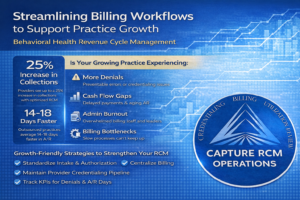
Practical Workflow Improvements That Support Expansion
1. Real-Time Authorization Tracking
Use trackers that flag upcoming expirations, missing approvals, and reauthorization deadlines.
2. Standardized Submission Checklists
Create a submission checklist for every payer to ensure consistency and reduce resubmissions.
3. Daily Denial Follow-Up Routines
Establish routines so denied claims are addressed before they age beyond 30 days.
4. Documentation Feedback Loops
Align clinicians and billing staff so notes are completed consistently and quickly.
5. Segment Payer Rules
Build payer-specific guidelines so teams know exactly what each plan expects.
These improvements help reduce the administrative strain that often accompanies growth.
When Workflow Strain Signals Deeper Structural Needs
If strain persists even after workflow improvements, it may be time to evaluate whether your current infrastructure is keeping pace with your practice’s growth goals.
For practices struggling to scale without strain, a coordinated workflow strategy supported by behavioral health revenue cycle management oversight can provide a framework for predictable expansion and healthier cash flow.
Early Signs Your Workflow System Is Under Stress
Watch for:
- Increasing days in A/R
- Rising denial rates
- Backlogged authorization queues
- Credentialing lagging behind clinician growth
- Staff reporting reactive workflows instead of proactive cycles
These signs suggest that the administrative backbone needs reinforcement.
The Bigger Picture
Scaling is not just about adding bodies or programs — it’s about ensuring your operational systems keep pace.
By tightening bottlenecks in billing workflows, practices can scale more predictably, reduce cash flow strain, and maintain a higher level of service quality — without burning out administrative and clinical teams.
Ready to Strengthen Your Revenue Before You Scale?
Whether you’re planning to open a new location, add new services, or hire more clinicians, your RCM needs to grow with you.
Our team specializes in behavioral health revenue cycle management and has helped providers across the country recover lost revenue, reduce denial rates, and scale with confidence.
Learn more about our services here, or call us directly to schedule a billing audit or credentialing consult.
📞 Call (380) 383-6822 or visit us to learn more about our behavioral health revenue cycle management services.