
Clinical directors are increasingly responsible not only for clinical quality but also for operational compliance. In behavioral health organizations, services, billing, mental health workflows directly affect both financial stability and regulatory exposure. When revenue cycle oversight is weak, even small documentation or coding issues can lead to claim denials, payment delays, or payer audits.
Strong oversight ensures that clinical documentation, billing workflows, and payer requirements remain aligned. This protects the organization’s revenue while ensuring clinicians can focus on patient care.
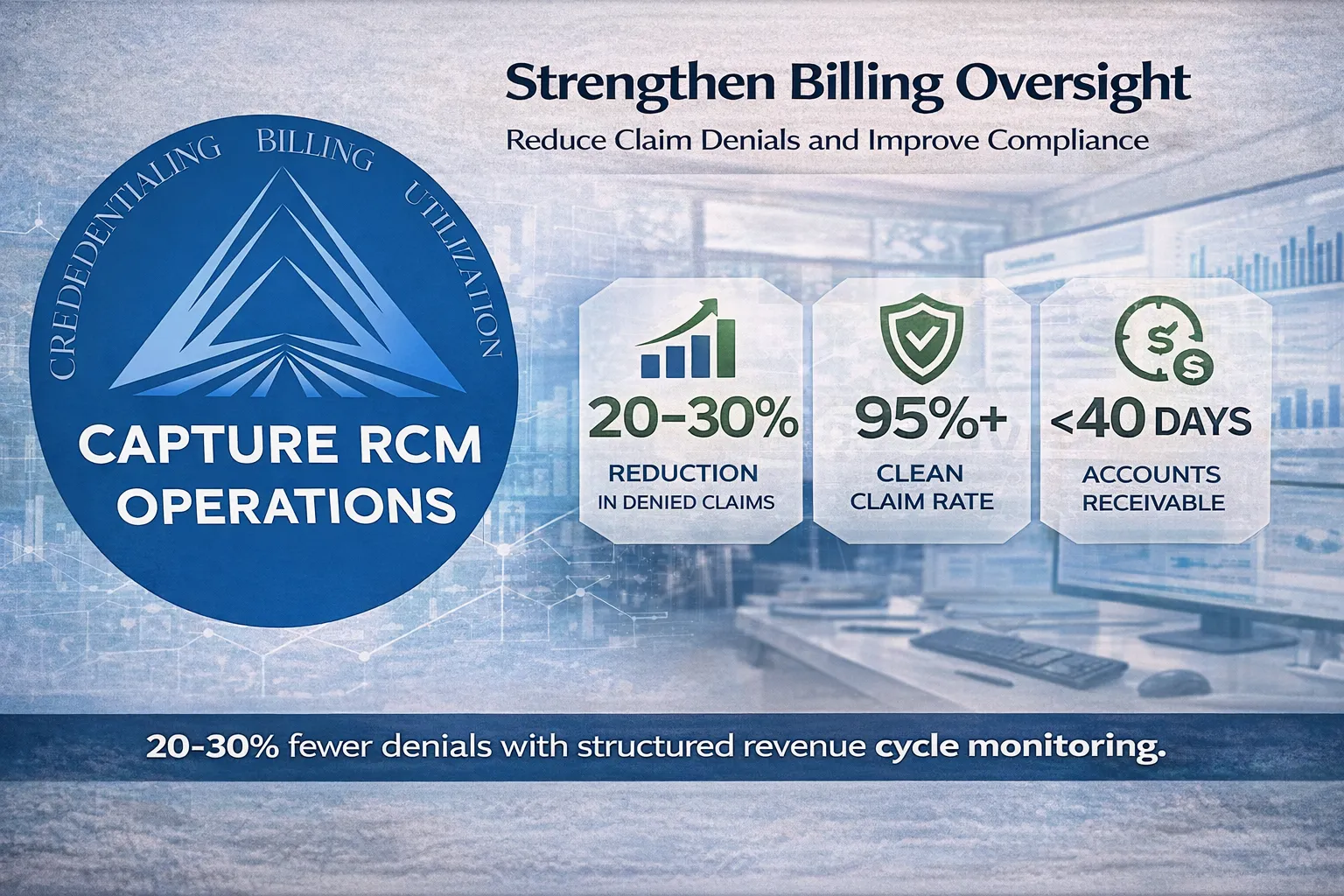
Organizations that implement structured oversight processes often see measurable improvements. Industry studies show behavioral health providers can reduce claim denials by 20–30% after implementing stronger revenue cycle monitoring and compliance procedures.
For clinical directors seeking reliable infrastructure, reviewing specialized mental health billing services early in the process can provide insight into how professional revenue cycle management frameworks support both compliance and operational efficiency.
The following steps outline how clinical directors can strengthen billing oversight while maintaining high standards of care.
Establish Clear Revenue Cycle Governance
Revenue cycle oversight begins with clearly defined governance. In many behavioral health organizations, billing responsibilities evolve informally over time. Front desk staff verify insurance, clinicians document services, and billing teams submit claims. Without formal oversight, gaps develop between these functions.
Clinical directors should implement a governance structure that defines who is responsible for each stage of the revenue cycle. This structure often includes collaboration between clinical leadership, compliance officers, and billing managers.
A typical oversight framework should define accountability for:
- Patient eligibility and insurance verification
- Clinical documentation standards
- CPT coding accuracy
- Claim submission timelines
- Denial management processes
- Financial performance reporting
When responsibilities are clearly assigned, operational gaps become easier to identify and correct. Governance also allows clinical leaders to intervene early if billing metrics indicate emerging problems.
Healthcare revenue cycle studies indicate that organizations with structured billing oversight frameworks often reduce administrative errors by 15–20% within the first year.
Align Clinical Documentation With Billing Standards
Documentation is the foundation of compliant billing in behavioral health. Insurance payers require documentation that demonstrates medical necessity, therapeutic intervention, and session duration.
Mental health services rely heavily on time-based CPT codes, making documentation accuracy especially important. Even small inconsistencies between notes and billing codes can result in claim denials.
Clinical directors should establish clear documentation guidelines that include:
- Session start and end times
- Description of therapeutic interventions
- Treatment goals and patient response
- Progress toward care plan objectives
- Medical necessity justification
For example, billing code 90834 represents a 45-minute psychotherapy session, while 90837 represents a 60-minute session. If documentation does not clearly support the duration or clinical intervention, insurers may reject the claim.
Organizations that implement documentation training programs for clinicians often reduce billing errors significantly. Some practices conduct monthly chart reviews to ensure documentation aligns with billing requirements.
These reviews not only improve reimbursement accuracy but also protect clinicians during payer audits.
Monitor Key Revenue Cycle Performance Metrics
Effective oversight requires consistent monitoring of financial performance indicators. Clinical directors should review revenue cycle metrics regularly to identify operational inefficiencies.
Important metrics include:
- Clean claim rate – percentage of claims accepted on first submission
- Days in accounts receivable (A/R) – average time to receive payment
- Denial rate – percentage of claims rejected by insurers
- Net collection rate – percentage of total collectible revenue received
- Authorization approval rate – percentage of approved treatment authorizations
High-performing behavioral health organizations typically maintain:
- Clean claim rate above 95%
- Accounts receivable under 40 days
- Denial rates below 5–7%
If these metrics fall outside expected ranges, clinical directors should investigate potential causes. Issues may involve incomplete documentation, coding errors, or insurance eligibility problems.
Regular financial reporting meetings between clinical leadership and billing teams help ensure problems are addressed promptly.
Strengthen Compliance and Audit Preparedness
Insurance audits have increased significantly in behavioral health over the past decade. Payers often review claims to confirm documentation supports billed services and that treatment meets medical necessity standards.
Clinical directors play a critical role in ensuring audit readiness.
Organizations should implement compliance safeguards that include:
- Routine chart audits
- Documentation review protocols
- Authorization verification procedures
- Coding accuracy reviews
- HIPAA compliance monitoring
Many behavioral health organizations conduct quarterly internal audits to evaluate documentation and billing accuracy. These audits allow leadership to identify issues before insurers detect them.
For example, internal reviews may reveal patterns such as missing session times or inconsistent treatment plan updates. Addressing these issues proactively can prevent costly claim recoupments during payer audits.
Audit readiness also builds confidence among clinical staff by ensuring that documentation standards remain clear and consistent.
Improve Communication Between Clinical and Billing Teams
Revenue cycle efficiency improves when clinical and billing teams collaborate closely. Billing specialists often identify patterns in denied claims that clinicians may not see.
For example, recurring denials may indicate:
- Missing authorization documentation
- Incorrect modifiers for telehealth services
- Incomplete session notes
- CPT coding mismatches
Clinical directors should facilitate regular meetings between clinical staff and billing teams to review these issues.
Collaborative discussions help clinicians understand how documentation decisions affect reimbursement outcomes. Billing teams also gain better insight into clinical workflows, which helps them process claims more accurately.
Organizations that encourage communication between clinical and administrative teams often experience improved claim accuracy and faster reimbursement cycles.
Use Technology to Improve Oversight and Transparency
Modern revenue cycle management platforms provide powerful tools for monitoring billing performance. These technologies help clinical directors maintain oversight without managing day-to-day billing operations.
Advanced billing systems often include:
- Automated insurance eligibility verification
- Real-time claim tracking dashboards
- Denial analytics and trend reports
- Authorization monitoring tools
- Financial performance reporting
These systems allow leadership to identify operational bottlenecks quickly. For example, if a large number of claims remain unpaid beyond 45 days, leadership can investigate whether payer delays or documentation issues are responsible.
Some platforms also integrate with electronic health records (EHR) to flag documentation inconsistencies before claims are submitted.
Technology-driven oversight provides transparency while reducing administrative workload for clinical leadership.
Address Common Compliance Concerns Proactively
Clinical directors often worry that billing oversight will interfere with clinical autonomy. In reality, strong revenue cycle oversight supports clinicians by preventing administrative problems that can disrupt patient care.
Common concerns include:
Concern: Billing oversight will increase administrative burden for clinicians.
Well-designed documentation standards actually simplify workflows by clarifying expectations.
Concern: Compliance audits will slow down treatment processes.
Routine internal audits typically require only small documentation reviews and prevent larger disruptions caused by insurer audits.
Concern: Revenue cycle monitoring is primarily a financial function.
In behavioral health, billing accuracy is closely tied to treatment documentation and clinical integrity.
Addressing these concerns openly helps clinicians understand that revenue cycle oversight protects both the organization and patient care.
Partner With Specialized Mental Health Billing Experts
Many behavioral health organizations strengthen oversight by working with specialized billing partners.
Behavioral health billing requires knowledge of psychotherapy coding, insurance authorization rules, and payer documentation standards. General medical billing companies may not fully understand these complexities.
Professional billing partners often provide:
- Dedicated behavioral health billing specialists
- Compliance monitoring systems
- Detailed financial performance reports
- Denial management and appeals processing
- Payer communication support
These services allow clinical directors to maintain oversight while ensuring revenue cycle operations are managed by experienced professionals.
For organizations experiencing rapid growth, outsourcing billing can also help scale operations without adding administrative staff.
Build a Culture of Revenue Cycle Accountability
Long-term success requires more than policies and procedures. Organizations must develop a culture that recognizes revenue cycle integrity as part of clinical excellence.
Clinical directors can reinforce this culture by:
- Providing documentation training for clinicians
- Sharing financial performance insights with leadership teams
- Recognizing improvements in billing accuracy
- Encouraging collaboration between departments
When clinicians understand how accurate documentation supports both reimbursement and patient care, compliance becomes a shared responsibility.
This cultural alignment strengthens operational stability and ensures revenue cycle oversight remains effective over time.
Frequently Asked Questions
Why is revenue cycle oversight important for clinical directors?
Clinical directors oversee treatment quality and clinical compliance. Because billing is closely tied to documentation and medical necessity, strong revenue cycle oversight helps ensure both regulatory compliance and accurate reimbursement.
What are the most common billing compliance risks in mental health services?
Common risks include incomplete documentation, incorrect CPT coding, missing authorization records, and inconsistencies between session notes and billed services.
How often should behavioral health organizations conduct billing audits?
Most organizations conduct internal billing and documentation audits quarterly. However, larger organizations may perform monthly reviews to identify issues earlier.
What metrics should clinical directors monitor in billing operations?
Key metrics include clean claim rate, denial rate, accounts receivable days, and net collection rate. Monitoring these indicators helps leadership detect operational problems before they affect revenue.
Can outsourced billing improve compliance?
Yes. Specialized billing providers experienced in behavioral health often implement advanced compliance checks and monitoring systems. This helps organizations reduce billing errors and maintain audit readiness.
How can clinicians improve billing accuracy?
Clinicians can improve billing accuracy by maintaining detailed session notes, documenting treatment interventions clearly, and ensuring that documentation supports the CPT codes submitted for reimbursement.
Call to Action
Strengthening oversight of services, billing, mental health operations protects your organization from compliance risks while improving financial performance. A specialized revenue cycle partner can help clinical leaders maintain transparency, audit readiness, and operational efficiency.
Call (380) 383-6822 or visit our mental health billing services to learn more about our services, billing, mental health services in your area.