


Behavioral health practices today operate in a financially complex environment. Insurance requirements continue to evolve, payer scrutiny is increasing, and administrative burdens are growing heavier for providers. Many practice owners find themselves dealing with claim denials, delayed reimbursements, and shrinking profit margins—all while trying to focus on delivering quality patient care.
Without a structured billing strategy, even successful practices can struggle with inconsistent cash flow. This is why many organizations rely on professional Behavioral Health Revenue Cycle Management services to stabilize their financial operations and improve revenue performance.
A strong Behavioral Health Revenue Cycle Management framework ensures claims are accurate, payments arrive faster, and compliance risks are minimized. For practice owners, this translates into predictable revenue and long-term operational stability.
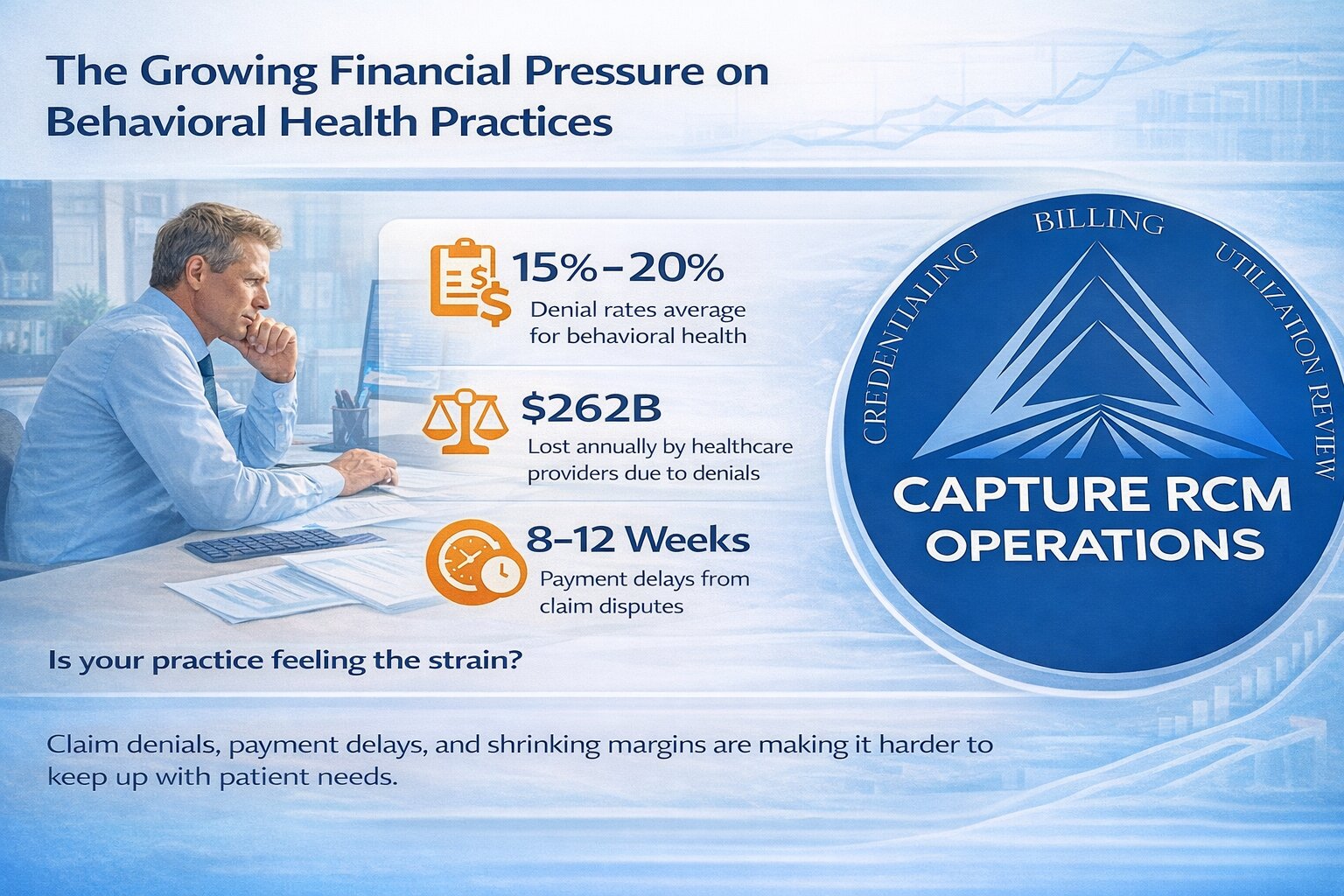
The Growing Financial Pressure on Behavioral Health Practices
The behavioral health sector has experienced rapid growth over the past decade. Demand for services such as therapy, intensive outpatient programs (IOP), partial hospitalization programs (PHP), and applied behavior analysis (ABA) continues to increase nationwide.
However, financial management has become significantly more complicated.
Behavioral health billing involves:
- Multiple payer contracts
- Complex CPT coding requirements
- Frequent prior authorization requirements
- Strict medical necessity documentation standards
- Ongoing payer policy changes
Because of these complexities, claim denials occur more frequently than in many other healthcare specialties.
Industry research shows that healthcare providers lose up to $262 billion annually due to claim denials, with behavioral health providers often experiencing denial rates between 15% and 20%. Each denied claim not only delays revenue but also increases administrative workload.
For practices already managing staffing shortages and operational costs, this creates significant financial strain.
Why Claim Denials Are Increasing in Behavioral Health
Claim denials rarely happen by accident. Most denials result from identifiable issues within the billing workflow.
Understanding the most common causes allows practice owners to implement preventive strategies.
Prior Authorization Issues
Behavioral health services frequently require pre-authorization from insurance companies. If services are provided without proper authorization, claims may be rejected automatically.
Authorization mistakes often occur when:
- The number of approved sessions is exceeded
- Authorization expiration dates are missed
- Incorrect service levels are authorized
A well-managed revenue cycle ensures authorization details are verified before services are delivered.
Documentation and Medical Necessity Requirements
Insurance payers require clear documentation demonstrating that treatment is medically necessary. Behavioral health providers must document:
- Diagnosis and treatment goals
- Session notes
- Treatment progress
- Clinical justification for level of care
Incomplete documentation can lead to denied claims or audit risks.
Revenue cycle specialists often work alongside providers to ensure documentation standards meet payer requirements.
Coding and Billing Errors
Behavioral health billing includes numerous CPT codes and modifiers that vary by service type. Incorrect coding can trigger automatic rejections from payer systems.
Common coding errors include:
- Using outdated CPT codes
- Incorrect service duration documentation
- Missing modifiers required by specific payers
- Billing incompatible code combinations
Even small coding mistakes can delay payments by weeks or months.
The Real Cost of Delayed Payments
While claim denials receive the most attention, delayed payments can be just as damaging to a practice’s financial stability.
Healthcare payment timelines are already lengthy. Many insurers take 30 to 60 days to process claims. When denials occur, the correction and resubmission process can extend payment timelines even further.
For behavioral health practices, delayed payments can impact:
- Payroll stability
- Hiring decisions
- Program expansion plans
- Vendor payments
- Operational budgeting
According to healthcare revenue cycle studies, each denied claim costs providers an average of $25–$118 to rework.
Multiply this across hundreds of claims each month, and the financial impact becomes substantial.
Efficient Behavioral Health Revenue Cycle Management shortens reimbursement timelines and prevents unnecessary administrative costs.
Key Revenue Cycle Stages That Impact Cash Flow
Many practice owners believe billing begins when claims are submitted. In reality, revenue cycle management starts much earlier.
Every stage of the patient journey affects whether a claim will be successfully reimbursed.
Patient Eligibility Verification
Eligibility verification confirms whether a patient’s insurance policy covers the services being provided. Failure to verify coverage accurately can result in denied claims or unexpected patient balances.
Effective verification includes:
- Confirming active coverage
- Identifying covered services
- Understanding co-pays and deductibles
- Confirming network participation
Authorization Management
Authorization tracking ensures services remain within the limits approved by insurance providers. This process requires constant monitoring to avoid authorization expiration.
Without proper oversight, practices risk delivering services that insurers refuse to reimburse.
Charge Capture and Coding
Charge capture ensures that all billable services are properly recorded. Accurate coding converts clinical services into billable claims that insurers can process.
Professional revenue cycle teams often audit coding processes to prevent revenue leakage.
Claims Submission and Monitoring
Submitting claims quickly and accurately is essential for consistent cash flow. Once submitted, claims must be tracked to ensure insurers process them correctly.
RCM teams monitor claim status and intervene quickly if issues arise.
Denial Management and Appeals
When claims are denied, rapid follow-up is critical. Successful denial management includes:
- Identifying the root cause of denials
- Correcting billing errors
- Submitting appeals with supporting documentation
- Tracking payer patterns
Practices that actively manage denials often recover significant lost revenue.
How Behavioral Health Revenue Cycle Management Improves Financial Performance
A well-structured revenue cycle system transforms billing into a strategic business function.
Instead of reacting to payment problems, practices can proactively optimize revenue collection.
Key benefits include:
Reduced Claim Denials
Pre-submission claim reviews identify potential issues before claims reach the payer. This significantly increases first-pass claim acceptance rates.
Faster Reimbursements
Clean claims move through insurance processing systems faster, improving cash flow.
Increased Revenue Recovery
Professional denial management helps recover revenue that might otherwise be written off.
Stronger Financial Visibility
Detailed reporting provides insight into payer performance, reimbursement rates, and denial trends.
These insights allow practice owners to make informed financial decisions.
Compliance: A Critical Component of Revenue Cycle Management
Behavioral health practices must maintain strict compliance with insurance regulations and healthcare laws.
Improper billing practices can lead to:
- Insurance audits
- Financial penalties
- Contract termination
- Legal liability
Strong Behavioral Health Revenue Cycle Management processes ensure:
- Proper coding standards
- Accurate documentation
- Consistent billing practices
- Audit-ready financial records
For practice owners, compliance protection is just as important as revenue optimization.
Signs Your Practice May Need Revenue Cycle Support
Many behavioral health practices initially manage billing internally. As patient volume grows, billing complexity often becomes overwhelming.
Common warning signs include:
- Rising claim denial rates
- Accounts receivable exceeding 60–90 days
- Billing staff struggling with workload
- Limited visibility into financial performance
- Frequent payer disputes
When these issues persist, outsourcing revenue cycle operations can provide immediate operational relief.
Experienced RCM specialists understand payer requirements and industry regulations, allowing practices to focus on patient care.
Behavioral Health Revenue Cycle Management as a Growth Strategy
Revenue cycle management is often viewed as a back-office function. In reality, it plays a central role in practice growth.
When revenue systems operate efficiently, practices gain the financial stability needed to expand services and improve patient care.
Effective RCM enables practices to:
- Hire additional clinicians
- Expand treatment programs
- Invest in new facilities or technology
- Improve patient access to care
- Strengthen financial forecasting
For behavioral health organizations navigating rapid industry change, revenue cycle optimization is essential for sustainable growth.
Frequently Asked Questions (FAQ)
What is Behavioral Health Revenue Cycle Management?
Behavioral Health Revenue Cycle Management refers to the process of managing billing, insurance claims, payments, and compliance for behavioral health services. It includes everything from insurance verification to claim submission, denial management, and financial reporting.
Why is revenue cycle management more complex for behavioral health providers?
Behavioral health billing often requires prior authorizations, strict medical necessity documentation, and specialized CPT coding. These requirements increase the risk of claim denials and delayed payments compared to other healthcare specialties.
How can revenue cycle management reduce claim denials?
RCM systems reduce denials by verifying insurance eligibility, managing authorizations, ensuring proper documentation, and reviewing claims for errors before submission. These steps improve first-pass claim acceptance rates.
Should behavioral health practices outsource revenue cycle management?
Many practices outsource RCM to improve efficiency and reduce administrative workload. Outsourcing provides access to specialists who understand payer requirements and billing regulations, which can lead to faster reimbursements and improved compliance.
How long does it typically take to improve revenue cycle performance?
Many practices see measurable improvements within the first 60–90 days after implementing structured revenue cycle management processes. Improvements often include reduced denial rates, faster reimbursements, and clearer financial reporting.
Improve Revenue Stability with Expert Revenue Cycle Management
Claim denials, payment delays, and billing inefficiencies can significantly affect the financial health of a behavioral health practice. Addressing these challenges requires a structured and proactive revenue cycle strategy.
If your organization is experiencing rising denial rates or inconsistent cash flow, professional revenue cycle support can help improve financial performance while protecting compliance.
Call 380-383-6822 or visit our Behavioral Health Revenue Cycle Management services to learn more about our Behavioral Health Revenue Cycle Management services.