

Mental health providers operate in an increasingly complex reimbursement environment. Prior authorization requirements vary across payers, programs, and treatment levels, making authorization management a critical operational responsibility.
For operations managers, the goal is not just to secure approvals—it’s to build systems that ensure authorized services are delivered, tracked, and billed correctly. Without this structure, even high-quality care can lead to lost revenue.
A well-designed authorization tracking system aligns clinical services with payer approvals, helping organizations maintain compliance while improving reimbursement outcomes. When integrated with optimized services, billing, mental health processes, these systems help prevent denials, accelerate claims processing, and protect financial stability.
Why Authorization Tracking Is Critical for Mental Health Services Billing
Mental health services often require payer authorization before treatment can begin or continue. These approvals apply to services such as:
- Intensive Outpatient Programs (IOP)
- Partial Hospitalization Programs (PHP)
- Extended therapy sessions
- Psychiatric evaluations
- Medication management services
Unlike many medical services, behavioral health authorizations frequently include time-based or unit-based limits, meaning providers must carefully track utilization.
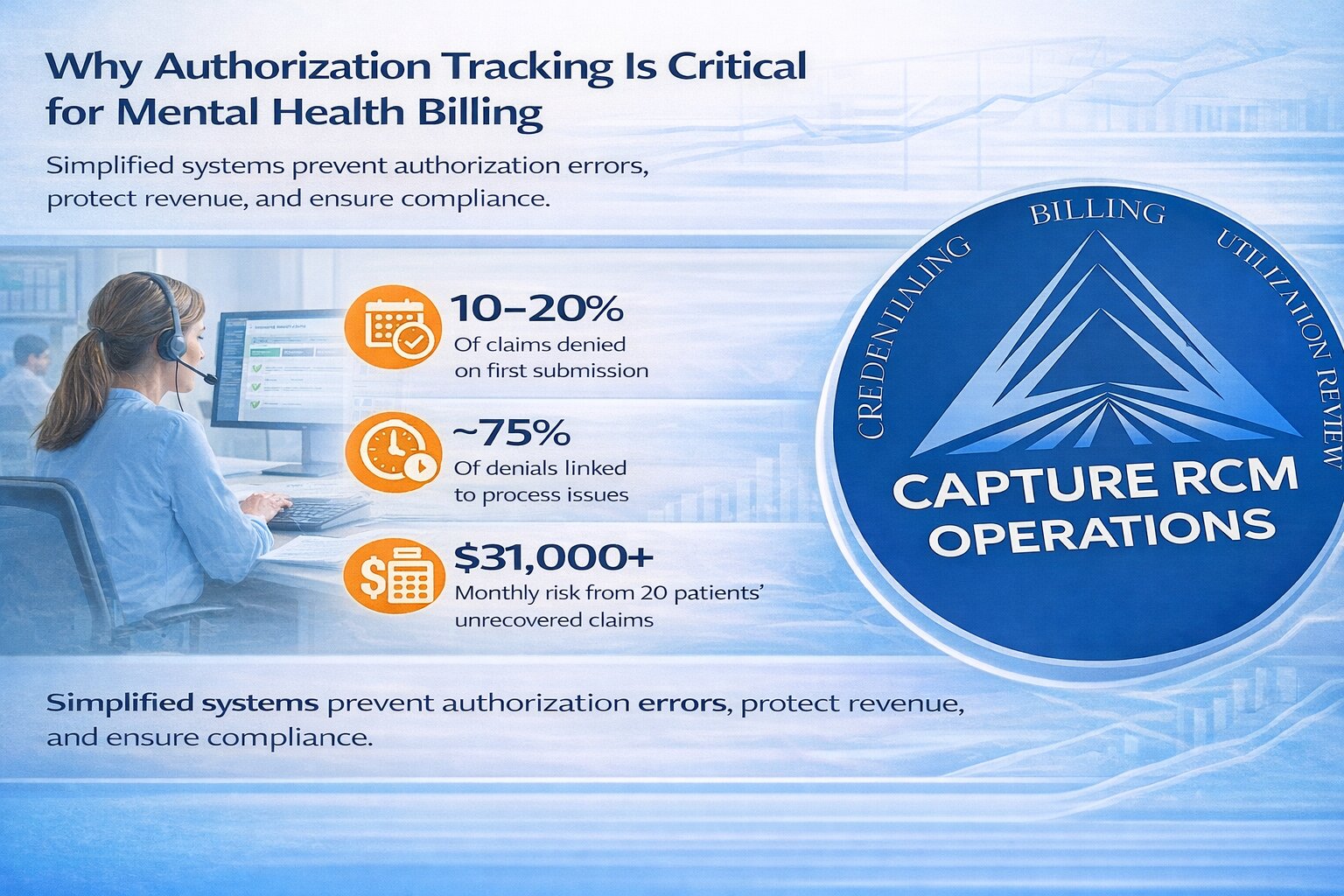
Industry research shows that 10–20% of healthcare claims are denied on first submission, and authorization errors are among the most common causes. These errors typically include:
- Missing authorization approvals
- Services delivered after authorization expiration
- Incorrect service codes linked to authorization numbers
- Exceeding approved units or session limits
For organizations operating multiple programs, these small administrative gaps can translate into substantial revenue losses.
Authorization tracking systems help eliminate these vulnerabilities by ensuring that clinical teams, billing staff, and operations managers work from the same authorization data.
Key Components of an Effective Authorization Tracking System
An authorization tracking system must function as a coordinated operational process rather than a standalone administrative task. The most effective systems integrate multiple checkpoints across intake, clinical operations, and billing.
1. Authorization Capture at Intake
The authorization process begins during patient intake. At this stage, teams must identify:
- Payer-specific authorization requirements
- Covered services and treatment levels
- Required documentation for approval
- Authorization submission timelines
Capturing this information early prevents treatment delays and reduces administrative rework.
2. Authorization Documentation Management
Every authorization approval must be documented clearly and consistently. Critical elements include:
- Authorization number
- Approved services and CPT codes
- Number of approved units or sessions
- Authorization start and end dates
This information should be stored in a centralized system accessible to both clinical and billing teams.
3. Utilization Tracking
Mental health treatment often involves multiple sessions over several weeks. Tracking utilization ensures that services delivered remain within payer-approved limits.
For example, if a payer authorizes 12 therapy sessions over 30 days, the organization must track how many sessions have already occurred and when reauthorization is needed.
4. Expiration Monitoring
One of the most common authorization failures occurs when services continue after authorization expiration.
Automated alerts should notify operations teams when authorizations are approaching expiration so reauthorization requests can be submitted proactively.
5. Reauthorization Workflow
Many mental health programs require periodic reauthorization based on clinical progress notes or treatment reviews.
A structured workflow ensures that reauthorization requests are submitted before service limits are reached.
Designing an Authorization Workflow Operations Managers Can Scale
Operations managers must build authorization workflows that remain effective as patient volume grows. Manual tracking systems often break down when organizations expand services or add new payer contracts.
A scalable authorization workflow typically includes five operational stages.
Stage 1: Eligibility and Authorization Verification
Before scheduling treatment, staff verify:
- Insurance eligibility
- Authorization requirements
- Coverage limitations
This step prevents scheduling services that may not be reimbursed.
Stage 2: Authorization Submission
Authorization requests should be submitted immediately after treatment planning. Documentation may include:
- Clinical assessment
- Diagnosis codes
- Treatment plan
- Proposed service schedule
Prompt submission reduces treatment delays.
Stage 3: Authorization Approval Logging
Once approval is received, authorization details must be entered into the tracking system. This data becomes the operational reference point for clinical scheduling and billing.
Stage 4: Utilization Monitoring
Operations teams monitor how many services have been delivered relative to approved limits.
This step ensures that clinicians do not unknowingly exceed authorized session counts.
Stage 5: Reauthorization Management
Reauthorization requests are submitted before service limits are reached, ensuring continuity of care without billing disruptions.
Technology That Improves Authorization Tracking Efficiency
Technology plays a central role in modern authorization management. Many organizations still rely on spreadsheets or manual tracking, which increases the risk of errors.
Integrated practice management systems and revenue cycle platforms offer powerful authorization tracking capabilities.
Key technology features include:
Automated Alerts
Notifications warn staff when authorizations are approaching expiration or utilization limits.
Centralized Authorization Dashboards
Operations managers can view authorization status across multiple patients and programs.
EHR and Billing Integration
Linking authorizations directly to clinical documentation and claims reduces data entry errors.
Claim Validation Tools
Systems verify authorization details before claims are submitted, reducing denial risk.
Organizations implementing these tools often experience improved billing accuracy and faster reimbursement cycles.
Common Authorization Failures That Lead to Claim Denials
Understanding common authorization failures allows operations managers to implement preventative controls.
Expired Authorizations
Services provided after authorization expiration are frequently denied, even when the treatment itself is medically necessary.
Incorrect Service Codes
Authorizations often apply only to specific CPT codes. Submitting claims with mismatched codes can result in claim rejection.
Exceeding Authorized Units
When providers exceed approved session counts, payers may deny additional services.
Delayed Authorization Requests
Submitting authorization requests after services have already begun may result in retroactive denial.
Documentation Gaps
Some payers require clinical documentation supporting continued care before approving reauthorization.
Proactive monitoring helps organizations avoid these costly errors.
Operational Checklist for Protecting Mental Health Billing Revenue
Operations teams can strengthen authorization management by implementing standardized operational controls.
Authorization Management Checklist
- Maintain a centralized authorization tracking database
- Integrate authorization data with scheduling and billing systems
- Implement automated expiration alerts
- Conduct weekly authorization status reviews
- Train clinical teams on authorized service limits
- Standardize payer-specific authorization requirements
- Audit authorization records regularly
These operational safeguards significantly reduce denial risk while improving billing efficiency.
Strengthening Authorization Management with Specialized RCM Support
Mental health organizations often face significant administrative pressure when managing payer authorizations internally. As patient volume grows and payer requirements evolve, authorization workflows become increasingly complex.
Specialized revenue cycle management partners help organizations build scalable authorization systems that integrate clinical scheduling, payer compliance, and billing operations. These systems improve visibility into authorization status and ensure services delivered align with payer approvals.
By optimizing authorization tracking, organizations protect revenue, reduce administrative burden, and allow clinical teams to focus on patient care.
Call 380-383-6822 or visit our services, billing, mental health services page to learn how Capture RCM Operations helps behavioral health providers streamline authorization workflows and protect reimbursement.
Frequently Asked Questions (FAQ)
What is an authorization tracking system in mental health billing?
An authorization tracking system is a process or technology used to monitor insurance approvals required for mental health services. It tracks authorization numbers, approved services, expiration dates, and session limits to ensure claims are submitted correctly.
Why are prior authorizations important for mental health services?
Many insurance companies require prior authorization before covering mental health services. Without approval, claims may be denied even if the treatment was medically necessary.
Authorization tracking ensures providers deliver services within approved payer guidelines.
What happens if a mental health provider misses an authorization?
If services are delivered without proper authorization, insurance companies may deny the claim. In some cases, providers cannot resubmit the claim, resulting in lost revenue.
This is why operations managers prioritize proactive authorization monitoring.
How can operations managers reduce authorization-related claim denials?
Operations managers can reduce denials by implementing:
- Centralized authorization tracking systems
- Automated alerts for expiration dates
- Standardized payer documentation workflows
- Regular authorization audits
These steps ensure services remain aligned with payer approvals.
Can technology automate authorization tracking?
Yes. Modern revenue cycle management systems can automate many aspects of authorization tracking, including:
- Authorization reminders
- Utilization monitoring
- Claims validation before submission
- Reporting dashboards for operations teams
Automation reduces manual errors and improves billing efficiency.
When should reauthorization requests be submitted?
Reauthorization requests should be submitted before authorized session limits are reached or before the authorization expires. Submitting early prevents gaps in treatment coverage and avoids claim denials.