

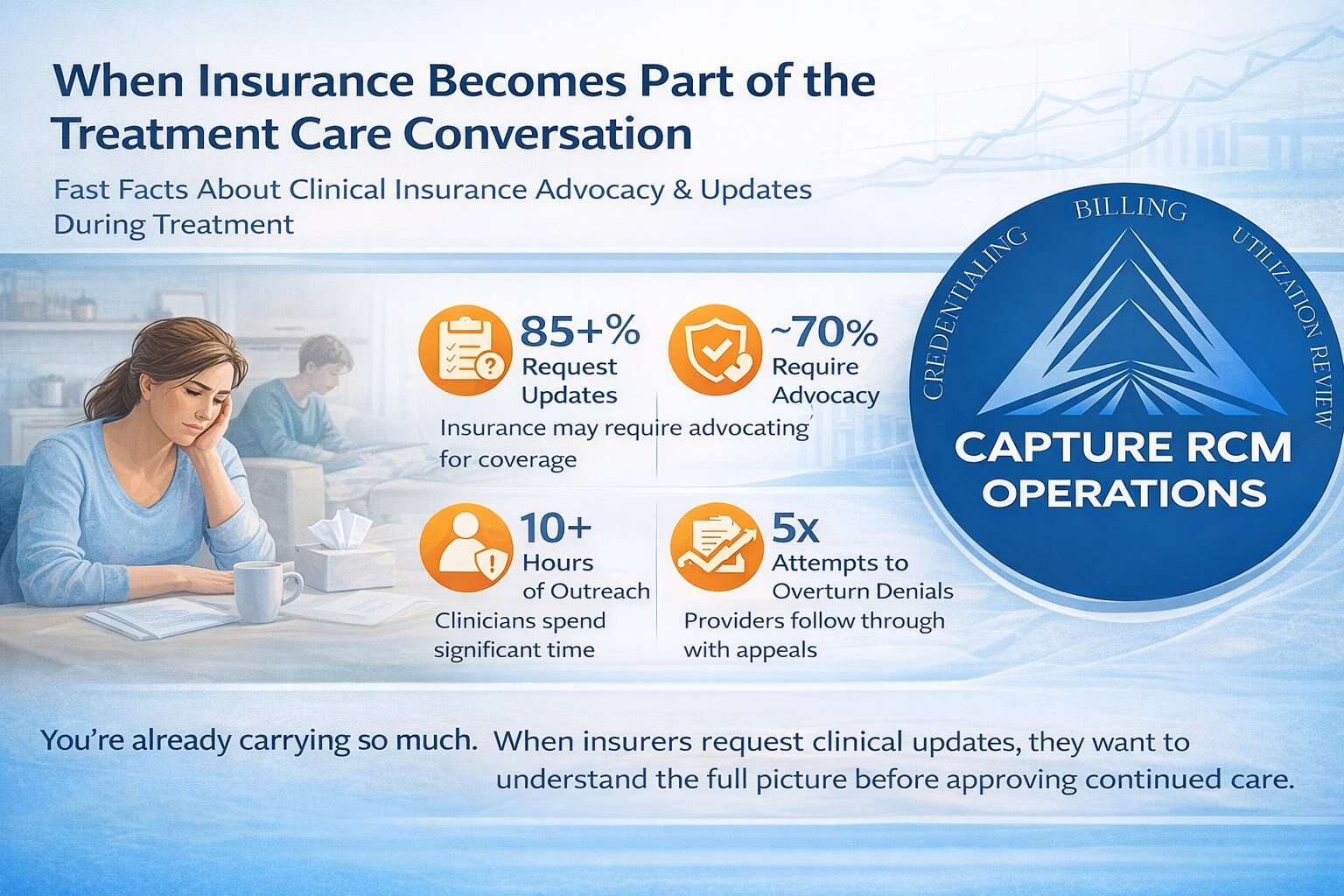
You’re already carrying so much.
When a child is struggling with substance use or mental health issues, parents spend most of their energy simply trying to keep things together—appointments, safety, hope, fear, and the quiet exhaustion that comes from loving someone who is hurting.
Then suddenly, someone mentions insurance.
“We need to send an update.”
“They’re reviewing the treatment plan.”
“Insurance is asking questions.”
And the ground shifts again.
Many families encounter this moment during treatment. The truth is, much of what happens behind the scenes is about protecting access to care, even though it rarely feels that way at first. Often, providers rely on structured support such as clinical insurance advocacy during treatment to communicate with insurers and ensure the full clinical picture is understood.
If you’ve felt confused or scared when insurance becomes part of the conversation, you’re not alone.
Let’s talk about what’s really happening.
The Moment Parents Realize Insurance Has a Say
For many parents, treatment begins with a sense of relief.
Your child is finally in a safe place.
Professionals are involved.
Something is finally being done.
Then, days or weeks later, someone mentions that insurance needs an update.
Suddenly it feels like another unknown player has entered the room.
Parents often wonder:
- Why is insurance involved at all?
- Can they stop treatment?
- What if my child still needs help?
These are deeply understandable questions.
Insurance companies help pay for treatment, which means they periodically review whether the care being provided still meets their coverage guidelines. But those reviews don’t happen in isolation. They happen in conversation with clinicians who are advocating for your child.
Why Treatment Teams Talk to Insurance Companies
Healthcare providers and insurers speak very different languages.
Clinicians talk about human experiences: fear, relapse risk, depression, emotional instability.
Insurance companies talk about documentation and coverage criteria.
So during treatment, providers must translate what they are seeing clinically into language that insurance systems understand.
This might involve sharing information such as:
- Current mental health symptoms
- Risk of relapse or withdrawal
- Safety concerns
- Treatment progress
- Reasons additional structure is still needed
These conversations are not meant to challenge the family or question the seriousness of the situation.
They are meant to demonstrate medical necessity—the formal way healthcare systems justify continued care.
To manage this process carefully, many treatment providers rely on dedicated utilization review services that focus specifically on communicating these clinical realities to insurers.
Why This Process Feels So Unsettling for Families
Parents often experience these insurance updates very differently than providers do.
For clinicians, it’s a routine administrative task.
For families, it can feel like someone is suddenly deciding your child’s future.
When a parent hears the phrase “insurance is reviewing the case,” it can trigger immediate fear:
- What if they say treatment is over?
- What if my child isn’t ready?
- What if we can’t afford the next step?
Those fears are real and valid.
Families who have already watched their child struggle once know how fragile progress can be.
And when recovery is finally starting, the idea that someone far away might interrupt it can feel unbearable.
But most reviews are scheduled checkpoints, not surprise decisions.
What Happens During These Behind-the-Scenes Conversations
While parents rarely hear the details, treatment teams spend significant time explaining the patient’s clinical needs.
During these conversations, clinicians may discuss things like:
- Emotional stability or instability
- Recent setbacks or progress
- Ongoing cravings or relapse risk
- Co-occurring mental health concerns
- Need for continued structure or supervision
The goal is simple: make sure the insurer understands why treatment is still necessary.
Think of it like translating your child’s experience into a language the insurance system recognizes.
It’s not always easy.
But it matters.
When documentation is clear and advocacy is strong, insurers are far more likely to approve continued care.
Why Parents Rarely See This Work
Most families never witness the hours clinicians spend communicating with insurers.
These conversations happen quietly—often several times during a treatment stay.
They involve documentation, phone calls, clinical summaries, and sometimes appeals if coverage is initially denied.
To parents, treatment may look like therapy sessions and group meetings.
But behind the scenes, there’s another layer of work focused on making sure insurance systems recognize the reality of what your child is facing.
One experienced treatment director once described it this way:
“Insurance doesn’t see the human being. They see the paperwork. Our job is to make sure the paperwork tells the truth.”
When Reviews Actually Extend Treatment
One of the biggest misconceptions parents have is that insurance reviews exist to shorten care.
Sometimes the opposite is true.
When clinicians clearly document ongoing risks and challenges, insurers may approve additional days or weeks of treatment.
That can mean:
- Extending residential care
- Continuing structured daytime treatment
- Approving additional therapy sessions
- Supporting step-down care rather than abrupt discharge
In those moments, the review process becomes something different.
It becomes a way of saying:
This person still needs support.
Families rarely hear about the dozens of these approvals happening quietly every day across treatment programs.
But they are part of how care continues.
The Emotional Reality Parents Carry Through All of This
Parents walking through addiction or mental health crises often carry an invisible weight.
You may still be thinking about:
- The first time you realized something was wrong
- The arguments that led to treatment
- The fear that things could spiral again
When insurance questions appear during treatment, they can reopen that fear.
It can feel like the stability you’ve just found might disappear.
But many families eventually learn something important.
These reviews are not happening instead of care.
They are happening to protect it.
And many professionals spend their entire careers ensuring those conversations are handled correctly.
A Quiet System Working in the Background
The healthcare system can feel overwhelming.
There are clinical teams, treatment programs, insurers, documentation requirements, and countless conversations families never see.
But many of the people involved in those processes are there for one reason:
To make sure patients have the time and support they need to recover.
Sometimes that work looks like therapy sessions.
Sometimes it looks like paperwork.
And sometimes it looks like long phone calls with insurance companies explaining why a young person still needs help.
None of it replaces the love and courage families bring to the process.
But it helps protect the space where healing can happen.
Frequently Asked Questions
Why does insurance review treatment at all?
Insurance companies review treatment to confirm that care meets their coverage guidelines. Providers must show that services remain medically necessary and appropriate for the patient’s current condition.
Does an insurance review mean treatment will stop?
Not necessarily. Many reviews are routine checkpoints. In many cases, when clinicians clearly document ongoing needs, insurance companies approve additional treatment time.
Who talks to insurance companies during treatment?
Typically, clinicians, case managers, or specialized professionals handle communication with insurers. Many treatment programs rely on utilization review services to manage these conversations and ensure the patient’s clinical needs are clearly documented.
Can insurance deny continued treatment?
In some cases, insurers may initially deny additional coverage. When that happens, providers can submit additional documentation or appeals explaining why continued care is necessary.
What can parents do during this process?
The most helpful thing parents can do is stay connected with the treatment team. Ask questions, attend family sessions when available, and share information about your child’s history that might help clinicians advocate for appropriate care.
Is it normal to feel overwhelmed by the insurance process?
Yes. Many parents feel confused or anxious when insurance becomes involved. The healthcare system can be complex, and families are often navigating it during one of the most stressful periods of their lives.
If You’re Trying to Understand This Process, You’re Not Alone
Many families encounter confusion when insurance becomes part of the treatment conversation. Having experienced professionals manage those communications can help ensure the clinical story is clearly understood by insurers.
Call 380-383-6822 or explore our insurance treatment review support to learn more about our Utilization review services and how they support treatment decisions for families navigating care.